Common Gynecological Problems Every Woman Should Know

How to Maintain a Healthy Liver: Diet, Lifestyle & Prevention Guide
February 17, 2026
Renal Stones (Kidney Stones): Causes, Symptoms & Lifestyle Changes to Prevent Recurrence
February 25, 2026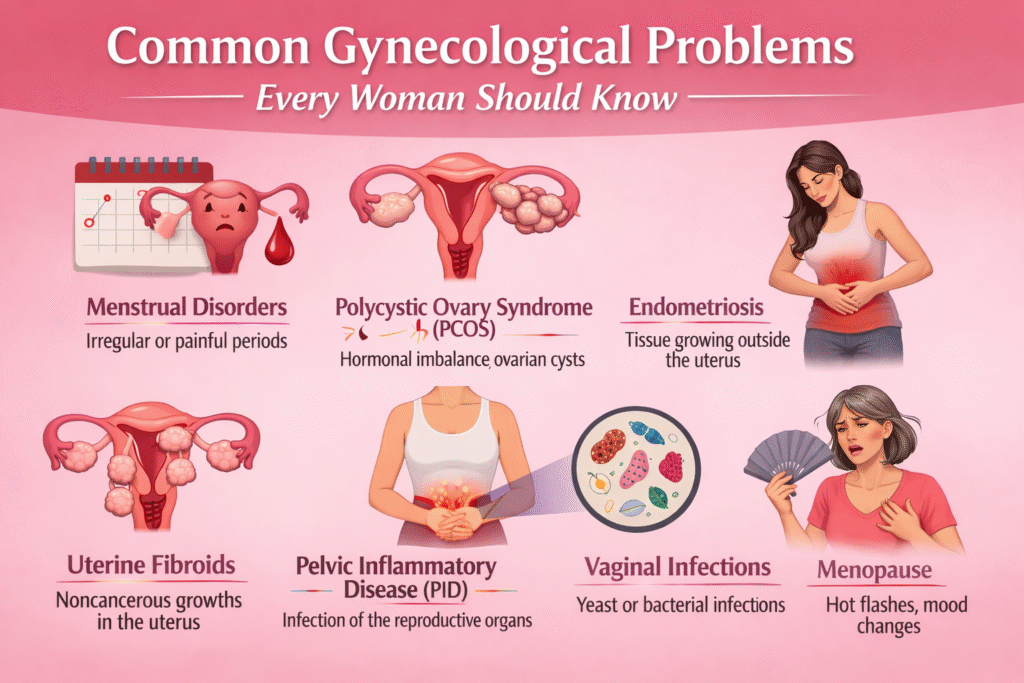
Women’s health is not something to think about only during pregnancy. From teenage years to menopause, your body goes through constant hormonal and physical changes. Many gynecological problems are common, yet often ignored because women feel shy, busy, or unsure about what is “normal.” The truth is simple: the earlier you understand symptoms, the easier it is to treat them.
This guide explains the most common gynecological problems, their symptoms, and when you should seek medical help.
1. Irregular Periods
Irregular periods are one of the most common concerns among women. A normal menstrual cycle usually ranges from 21 to 35 days. If your cycle frequently comes too early, too late, or skips entirely, it may signal an underlying issue.
Possible causes include:
- Hormonal imbalance
- Stress
- Polycystic Ovary Syndrome (PCOS)
- Thyroid disorders
- Sudden weight gain or loss
Occasional irregularity can happen due to lifestyle changes. But if your cycle remains unpredictable for several months, it is important to consult a specialist.
2. Polycystic Ovary Syndrome (PCOS)
PCOS affects many women of reproductive age. It is a hormonal disorder where the ovaries produce excess androgens (male hormones), leading to multiple small cysts in the ovaries.
Common symptoms:
- Irregular or missed periods
- Excess facial or body hair
- Acne
- Weight gain
- Difficulty conceiving
PCOS is manageable with lifestyle modifications, medication, and regular monitoring. Early diagnosis helps prevent complications like diabetes and infertility.
3. Painful Periods (Dysmenorrhea)
Mild discomfort during menstruation is normal. But severe pain that interferes with daily activities is not. Many women assume intense cramps are part of being a woman, but that is not always true.
Severe menstrual pain can be linked to:
- Endometriosis
- Fibroids
- Pelvic infections
If you regularly need strong painkillers or miss work or school due to cramps, do not ignore it. Proper evaluation can improve your quality of life.
4. Vaginal Infections
Vaginal infections are extremely common and usually treatable. The three main types are yeast infections, bacterial vaginosis, and sexually transmitted infections (STIs).
Symptoms may include:
- Itching or irritation
- Unusual discharge
- Foul odor
- Burning sensation while urinating
Ignoring infections can lead to complications, especially during pregnancy. Good hygiene and timely treatment are key.
5. Urinary Tract Infections (UTIs)
UTIs are more common in women due to their anatomy. They occur when bacteria enter the urinary tract.
Typical symptoms:
- Burning during urination
- Frequent urge to urinate
- Lower abdominal pain
- Cloudy or strong-smelling urine
Untreated UTIs can spread to the kidneys. Drinking enough water and seeking early treatment can prevent complications.
6. Fibroids
Uterine fibroids are non-cancerous growths in the uterus. Many women may have fibroids without knowing it, as they often cause no symptoms.
However, some women may experience:
- Heavy menstrual bleeding
- Pelvic pain
- Frequent urination
- Fertility issues
Treatment depends on the size, number, and location of fibroids. Options range from medication to surgical procedures.
7. Endometriosis
Endometriosis happens when tissue similar to the uterine lining grows outside the uterus. It can cause severe pain and fertility challenges.
Common signs:
- Severe menstrual cramps
- Pain during intercourse
- Heavy bleeding
- Difficulty getting pregnant
This condition often goes undiagnosed for years because symptoms are mistaken for normal period pain. If your pain feels extreme or worsening over time, do not dismiss it.
8. Pelvic Inflammatory Disease (PID)
PID is an infection of the female reproductive organs, often caused by untreated sexually transmitted infections.
Symptoms can include:
- Lower abdominal pain
- Fever
- Unusual discharge
- Pain during intercourse
If left untreated, PID can cause infertility or chronic pelvic pain. Early medical care is essential.
9. Cervical Health Issues
Changes in cervical cells can sometimes lead to cervical cancer if not detected early. The good news is that regular Pap smears can identify abnormal cells before they turn cancerous.
Most early stages show no symptoms. That is why routine screening is so important, even if you feel perfectly healthy.
10. Breast Concerns
Although technically not a gynecological organ, breast health is closely monitored by gynecologists. Lumps, nipple discharge, or changes in breast shape should never be ignored.
Most breast lumps are benign, but evaluation ensures safety and peace of mind.
11. Fertility Problems
Difficulty conceiving can be emotionally challenging. Infertility may be linked to PCOS, thyroid issues, endometriosis, blocked fallopian tubes, or male factors.
If you have been trying to conceive for over a year (or six months if above 35), it is advisable to consult a specialist for evaluation.
12. Menopause-Related Issues
Menopause usually occurs between 45 and 55 years of age. It marks the end of menstrual cycles.
Common symptoms include:
- Hot flashes
- Night sweats
- Mood swings
- Vaginal dryness
- Sleep disturbances
Though natural, menopause can significantly impact daily life. Treatment options are available to ease symptoms and improve comfort.
When Should You See a Doctor?
Many women delay medical visits due to embarrassment or busy schedules. But certain signs require prompt attention:
- Bleeding between periods
- Very heavy bleeding
- Severe pelvic pain
- Persistent unusual discharge
- Pain during intercourse
- Missed periods for several months without pregnancy
Regular checkups help detect problems early. Preventive care is always better than emergency treatment.
The Importance of Regular Gynecological Checkups
Routine visits are not only for pregnant women. Even if you feel healthy, annual examinations help monitor reproductive health, screen for infections, and detect abnormalities early.
A consultation with the Best Gynecologist Obstetrician in Unnao ensures personalized guidance tailored to your age, lifestyle, and future plans. Professional care gives clarity, confidence, and peace of mind.
Simple Steps to Maintain Gynecological Health
While not all conditions are preventable, certain habits support reproductive health:
- Maintain a balanced diet
- Exercise regularly
- Manage stress
- Practice safe sex
- Maintain intimate hygiene
- Avoid self-medication
- Schedule routine screenings
Small, consistent habits make a big difference over time.
Breaking the Silence Around Women’s Health
One of the biggest problems is not medical but social. Many women grow up believing that discussing menstrual or reproductive issues is uncomfortable. This silence leads to delayed diagnosis and unnecessary suffering.
Open conversations with family members, friends, and healthcare providers can normalize these discussions. Education empowers women to take control of their health.
Final Thoughts
Your body gives signals when something is wrong. Ignoring them does not make the problem disappear. Most gynecological conditions are treatable, especially when detected early.
Understanding common problems like irregular periods, PCOS, infections, fibroids, and menopause-related changes helps you make informed decisions. Regular checkups, healthy habits, and timely medical advice are the foundation of lifelong reproductive health.