Cervical Cancer: Symptoms, Causes, Stages & Treatment Options

Lifestyle Factors That Can Improve Male Fertility Naturally
September 5, 2026
Vaginal Infections: Symptoms, Causes and When to See a Gynecologist
September 17, 2026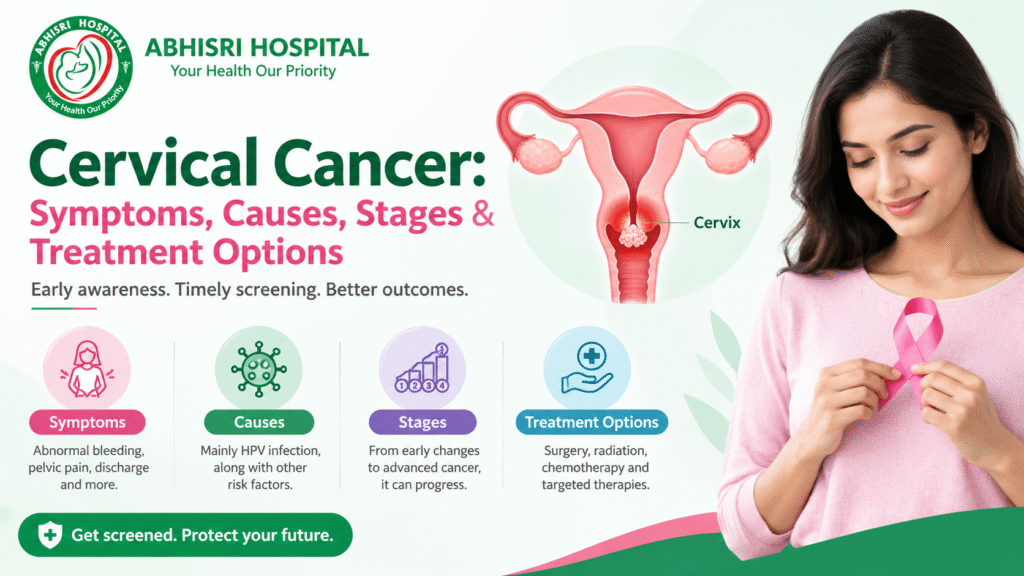
What Is This Disease and Why Does It Matter
Cervical cancer is a disease that begins in the cells of the cervix, the lower part of the uterus that connects to the vagina. It is most often linked to persistent infection with high-risk types of human papillomavirus (HPV), although several factors can increase risk. Early detection through screening can greatly improve outcomes. If you are concerned about symptoms or screening, consulting a qualified specialist, such as a best Gynecologist Obstetrician in Unnao, can help you choose appropriate next steps. Abhisri Hospital can provide guidance on evaluation, diagnosis, and treatment based on individual needs.
Understanding the warning signs, causes, stages, and available treatments helps people make informed decisions. Many early cases may cause no noticeable symptoms, which is why routine screening remains important even when you feel well. This guide explains what to watch for, how doctors confirm a diagnosis, how staging works, and what treatment choices may be considered.
Visible signs of Cervical Cancer to Watch for
The visible signs of cervical cancer vary, and early disease may cause none. Possible symptoms include:
- Unusual vaginal bleeding after sex, between periods, or after menopause
- Watery, bloody, or foul-smelling vaginal discharge
- Pelvic pain or pain during intercourse
- Heavier or longer menstrual bleeding than usual
These symptoms can also result from infections or other conditions. Persistent or unusual symptoms should be assessed by a healthcare professional.
Understanding Cervical Cancer Causes and Risk
The main cervical cancer causes are persistent infection with high-risk HPV types. HPV is common and often cleared by the immune system, but persistent infection can cause abnormal cell changes.
HPV infection and cell changes
High-risk HPV types, especially HPV 16 and 18, are associated with many cases. Most infections do not lead to cancer, but persistent infection can produce precancerous changes.
Factors that can increase risk
Risk may be higher with smoking, a weakened immune system, some contraceptive use, and limited access to screening. HPV can be acquired through intimate sexual contact, so partner history alone cannot predict risk.
Prevention and screening
HPV vaccination can prevent infection with several cancer-causing HPV types. Screening with HPV testing, cervical cytology (Pap testing), or approved combinations can detect precancerous changes early. Follow the schedule recommended for your age and risk level.
How Doctors Diagnose Cervical Cancer Accurately
Diagnosis usually starts with a medical history and pelvic examination. If screening or symptoms raise concern, a clinician may recommend additional testing.
Screening and pelvic examination
Screening identifies HPV infection or abnormal cells before invasive disease develops. A pelvic examination does not replace screening.
Colposcopy and biopsy
Colposcopy magnifies the cervix, and a clinician may take a biopsy for laboratory analysis. A biopsy is generally needed to confirm cancer.
Imaging and other tests
If cancer is confirmed, imaging may assess disease extent and guide treatment.
Stages and Spread Explained Clearly
Staging shows how far the disease has spread and guides treatment. It is based on examination, biopsy findings, and relevant tests.
- Stage I: Cancer is confined to the cervix.
- Stage II: Cancer extends beyond the cervix or uterus but not to the pelvic wall or lower vagina.
- Stage III: Cancer reaches the pelvic wall, lower vagina, nearby lymph nodes, or affects the urinary tract.
- Stage IV: Cancer reaches nearby organs or distant parts of the body.
Stages may have subgroups based on tumor size and lymph-node involvement. Ask your care team to explain your exact stage.
Cervical Cancer Treatment Choices by Stage
Cervical cancer treatment depends on stage, tumor features, health, fertility goals, and preferences. Options include surgery, radiation, chemotherapy, targeted therapy, immunotherapy, or combinations.
Surgery for earlier-stage disease
For selected early cancers, surgery may remove the tumor or cervix and surrounding tissues. Options include fertility-sparing procedures or hysterectomy, with lymph-node assessment when needed.
Radiation and chemotherapy
Radiation may be used alone or with chemotherapy, particularly for locally advanced disease. Chemotherapy may also be used when disease has spread.
Advanced or recurrent disease
For recurrent or metastatic disease, medicines may include chemotherapy, targeted treatments, or immunotherapy. Biomarker testing may help identify suitable therapies.
What to Expect During Your Care Journey
Before treatment, discuss benefits, side effects, fertility, and emotional support with your healthcare team. Abhisri Hospital can support coordinated care when needed.
Side effects may include fatigue, nausea, bowel or bladder changes, skin reactions, and fertility changes. Supportive care can manage many effects.
Keep a list of medicines, appointments, results, and questions. Report severe symptoms promptly and do not stop treatment without medical advice.
Practical Steps for Prevention and Early Detection
Prevention combines vaccination, screening, and timely medical evaluation.
- Ask whether HPV vaccination is appropriate for you or your child.
- Follow recommended screening intervals, even if you feel healthy.
- Avoid smoking, which can increase the likelihood of persistent HPV-related cell changes.
- Seek advice for unusual bleeding, persistent pelvic pain, or abnormal discharge.
- Keep follow-up appointments after an abnormal screening test.
Persistent symptoms need attention, but testing is required to confirm a diagnosis.
Prognosis and Follow-Up After Diagnosis
Outcomes depend on stage, tumor type, lymph nodes, health, treatment response, and recurrence. Earlier detection generally offers more options and better outcomes.
Abhisri Hospital may support follow-up when appropriate. Follow-up can include examinations and tests based on individual needs.
Quick Takeaways for Better Cervical Health
- HPV is the main preventable cause of most cases.
- Screening can identify precancerous changes early.
- Early disease may have no symptoms.
- Treatment is individualized according to stage and health.
- HPV vaccination and regular screening support prevention.
If you have concerning symptoms or an abnormal screening result, arrange a medical consultation. Abhisri Hospital can support evaluation and coordinated care, with decisions individualized by qualified clinicians.
FAQs About Symptoms and Treatment
What is the most common cause?
Persistent infection with high-risk HPV is the main cause.
Can it be prevented?
Many cases can be prevented through HPV vaccination and screening.
Can it be cured?
Some cases can be cured, especially when detected early. Prognosis depends on stage and other factors.
Is it painful?
Early disease may not cause pain. Pelvic pain or pain during intercourse can occur.
When should I see a doctor?
Seek medical advice for unusual vaginal bleeding, persistent abnormal discharge, pelvic pain, or an abnormal screening result.