Heavy Periods: Causes, Symptoms and Treatment Options for Women

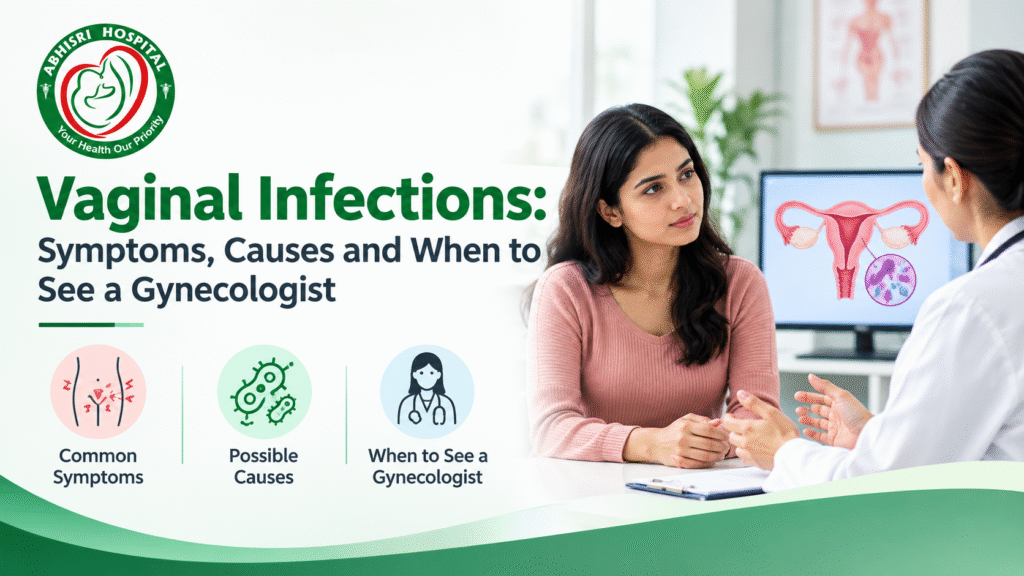
Vaginal Infections: Symptoms, Causes and When to See a Gynecologist
September 17, 2026
Heavy periods, medically known as menorrhagia, can affect a woman’s daily routine, work, sleep, and emotional well-being. Menstrual bleeding may be considered unusually heavy when you need to change a pad or tampon every hour for several hours, pass large blood clots, or experience bleeding that continues for more than seven days. These symptoms should not always be considered a normal part of your menstrual cycle, especially when they occur regularly.
At Abhisri Hospital, our gynecology team, guided by the best Gynecologist Obstetrician in Unnao, helps women identify the possible reasons behind heavy menstrual bleeding and choose appropriate treatment. Understanding the causes, warning signs, diagnosis, and available treatment options can help women seek timely medical care and protect their overall reproductive health.
What Are Heavy Periods?
Heavy periods refer to menstrual bleeding that is unusually heavy or lasts longer than expected. Although menstrual flow naturally varies from woman to woman, heavy menstrual bleeding may involve prolonged bleeding, frequent pad or tampon changes, or large blood clots.
Occasional changes in menstrual flow may not always indicate a serious problem. However, repeated or increasingly heavy bleeding can sometimes be associated with an underlying medical condition and should be evaluated by a gynecologist.
How Common Is It?
Heavy menstrual bleeding is a common gynecological concern among women during their reproductive years. Despite this, many women delay seeking medical advice because they assume that heavy bleeding is simply part of their normal menstrual cycle.
Common Causes of Heavy Periods
Identifying the underlying cause is an important part of managing heavy menstrual bleeding. Several hormonal, structural, and medical conditions may contribute to unusually heavy flow.
Hormonal Imbalance
An imbalance between estrogen and progesterone can cause the uterine lining to become thicker than usual. When this lining sheds during menstruation, the resulting bleeding may be heavier or last longer.
Hormonal changes are particularly common during adolescence, perimenopause, and in women with conditions such as polycystic ovary syndrome (PCOS).
Uterine Fibroids and Polyps
Fibroids and uterine polyps are non-cancerous growths that can contribute to heavy menstrual bleeding. Depending on their size and location, they may interfere with the normal structure of the uterus and lead to prolonged or heavier periods.
Other Medical Conditions
Several other health conditions may contribute to heavy menstrual bleeding, including adenomyosis, endometriosis, thyroid disorders, and certain blood-clotting disorders.
Some medications, including blood-thinning medicines, can also increase menstrual bleeding. In addition, certain intrauterine devices (IUDs), particularly non-hormonal types, may cause heavier periods in some women.
Symptoms to Watch For
Recognizing the warning signs can help women seek medical attention before complications develop. Common symptoms include:
- Changing a pad or tampon every hour for several consecutive hours
- Needing to use two menstrual products at the same time
- Passing unusually large blood clots
- Menstrual bleeding lasting longer than seven days
- Fatigue, weakness, dizziness, or shortness of breath
- Menstrual bleeding that interferes with work, exercise, sleep, or daily activities
- Requiring frequent nighttime changes of menstrual products
Persistent heavy bleeding may contribute to iron-deficiency anemia, particularly when blood loss continues over several menstrual cycles.
When to See a Doctor
Women should consult a gynecologist if heavy bleeding occurs regularly, suddenly becomes much heavier than usual, or affects normal daily activities.
Medical evaluation is especially important when heavy bleeding occurs with severe pelvic pain, bleeding between periods, bleeding after sexual intercourse, dizziness, extreme fatigue, or other symptoms of anemia.
Very heavy bleeding accompanied by severe weakness, fainting, or symptoms that feel like an emergency requires prompt medical attention.
How Heavy Periods Are Diagnosed
A gynecologist may use several methods to determine the reason for heavy menstrual bleeding. The evaluation depends on your symptoms, age, medical history, menstrual pattern, and other health factors.
Medical History and Pelvic Examination
Your doctor may ask about the duration and amount of menstrual bleeding, cycle patterns, medications, pregnancy history, and other symptoms. A pelvic examination may also help identify certain abnormalities.
Blood Tests
Blood tests can help check for anemia, thyroid problems, and certain blood-clotting disorders. If heavy bleeding has continued for a long time, checking iron levels may also be important.
Ultrasound or Hysteroscopy
An ultrasound can help identify conditions such as fibroids, polyps, or other structural abnormalities in the uterus. In selected cases, hysteroscopy may be recommended to examine the inside of the uterus more closely.
Treatment Options for Heavy Periods
Treatment depends on the underlying cause, severity of bleeding, age, general health, and whether you want to become pregnant in the future. Your gynecologist can recommend an approach based on your individual needs.
Medications
Several medicines may help reduce menstrual blood loss. Depending on the situation, treatment may include tranexamic acid, hormonal contraceptives, or hormonal intrauterine systems.
The appropriate medication depends on your medical history and the cause of the bleeding, so medicines should be used under medical guidance.
Non-Surgical Procedures
Endometrial ablation is a minimally invasive procedure that removes or destroys the uterine lining to reduce menstrual bleeding. It may be considered for selected women who do not plan to have future pregnancies.
Surgical Options
When heavy bleeding is associated with significant fibroids or does not improve with other treatments, surgery may be considered. Depending on the condition, options can include myomectomy to remove fibroids or hysterectomy to remove the uterus.
The choice of surgery depends on the underlying condition, symptoms, reproductive plans, and overall health.
Tips to Manage Heavy Periods at Home
Lifestyle measures can support your health while you receive appropriate medical care. They should not replace evaluation when heavy bleeding is persistent.
- Include iron-rich foods such as spinach, lentils, beans, and lean meat
- Stay hydrated throughout your menstrual cycle
- Maintain a balanced and nutritious diet
- Track your periods, flow, and symptoms using a cycle-tracking app
- Get adequate rest when bleeding is particularly heavy
- Discuss iron supplements with your doctor if blood tests show iron deficiency
Conclusion
Heavy periods are common, but persistent or unusually heavy menstrual bleeding should not be ignored. The condition may result from hormonal changes, fibroids, polyps, thyroid problems, bleeding disorders, or other underlying causes. Early evaluation can help identify the reason for excessive bleeding and reduce the risk of complications such as anemia.
At Abhisri Hospital, women can receive personalized gynecological evaluation and treatment based on their symptoms, health history, and reproductive goals. If your menstrual bleeding is unusually heavy, prolonged, or interfering with everyday life, speaking with a qualified gynecologist can help you understand the cause and explore suitable treatment options.
Frequently Asked Questions
1. What is considered a heavy period?
A period may be considered unusually heavy when bleeding is prolonged, requires very frequent changes of menstrual products, involves large clots, or significantly interferes with daily activities.
2. Can heavy periods be a sign of something serious?
Heavy menstrual bleeding can sometimes be associated with conditions such as fibroids, hormonal disorders, thyroid problems, adenomyosis, or bleeding disorders. Medical evaluation can help identify the cause.
3. How are heavy periods treated?
Treatment depends on the underlying cause and may include medications, hormonal treatment, minimally invasive procedures, or surgery in selected cases.
4. Can diet help manage heavy periods?
An iron-rich and balanced diet can support overall health and help reduce the risk of iron deficiency caused by blood loss. However, diet alone cannot treat an underlying medical cause of heavy bleeding.
5. When should I see a gynecologist for heavy periods?
You should consider seeing a gynecologist if bleeding regularly lasts more than seven days, requires frequent pad or tampon changes, involves large clots, or causes symptoms such as fatigue, dizziness, or weakness.