Renal Stones (Kidney Stones): Causes, Symptoms & Lifestyle Changes to Prevent Recurrence

Common Gynecological Problems Every Woman Should Know
February 25, 2026
Safe Holi 2026: Medical Precautions to Prevent Skin, Eye & Respiratory Problems
March 5, 2026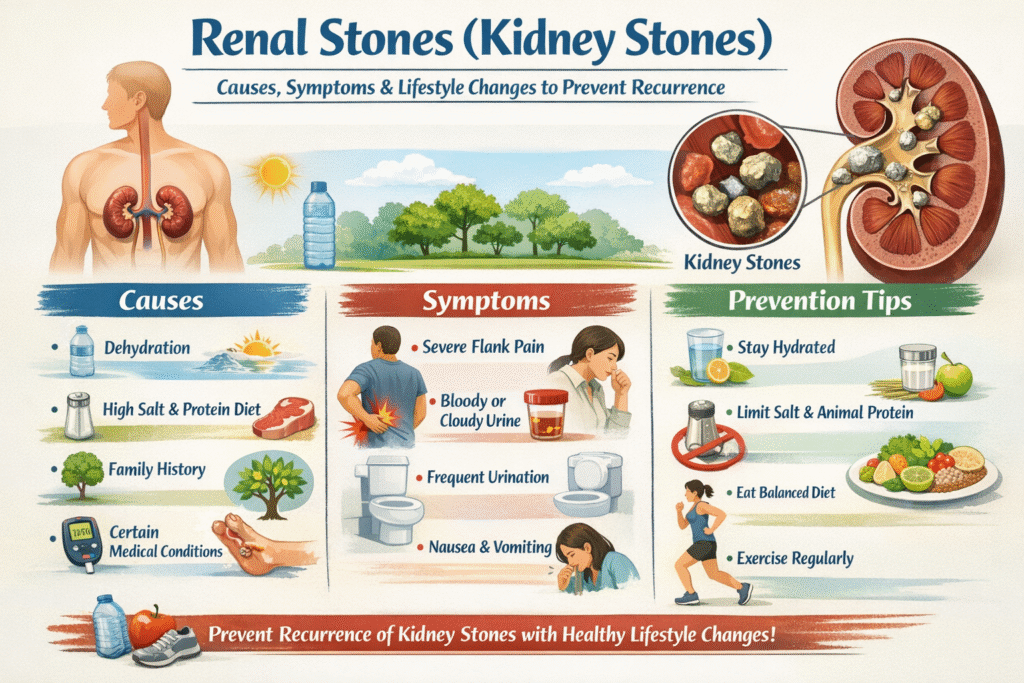
Kidney stones (renal stones) are one of the most common urinary tract problems affecting people of all age groups. They are painful, recurrent, and often linked to lifestyle and dietary habits. The good news is that most kidney stones can be prevented with proper hydration, diet control, and simple lifestyle modifications. For patients who develop severe kidney complications or require advanced kidney care, access to a reliable Dialysis Facility at Abhisri Hospital in Unnao becomes essential. The Dialysis Facility at Abhisri Hospital in Unnao provides professional medical support and advanced treatment options to help patients manage kidney-related conditions and maintain better overall health.
This guide explains causes, symptoms, treatment, and proven lifestyle changes to prevent kidney stone recurrence.
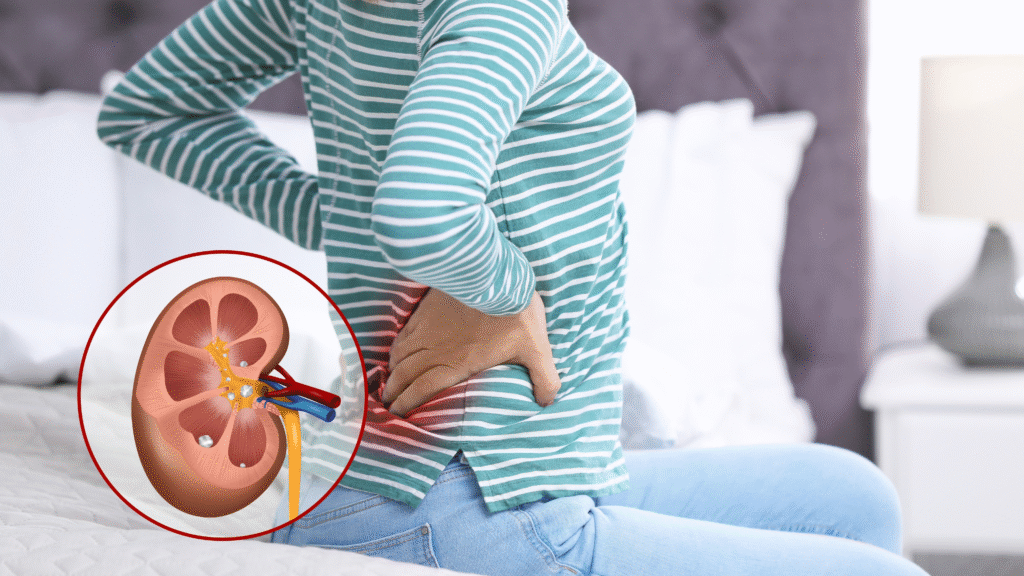
What Are Kidney Stones?
Kidney stones are hard deposits made of minerals and salts that form inside the kidneys when urine becomes concentrated. The most common types include:
• Calcium oxalate stones (most common)
• Calcium phosphate stones
• Uric acid stones
• Infection-related (struvite) stones
• Cystine stones (rare genetic type)
Causes of Kidney Stones
Kidney stones usually develop due to a combination of dietary, metabolic, and lifestyle factors:
• Low water intake (most common cause)
• High salt (sodium) diet
• Excess oxalate-rich foods
• High animal protein intake
• Obesity and sedentary lifestyle
• Recurrent urinary tract infections
• High uric acid levels
• Family history of kidney stones
Symptoms of Kidney Stones
Common symptoms include:
• Severe pain in the side (flank pain) radiating to groin
• Burning sensation during urination
• Blood in urine (hematuria)
• Nausea and vomiting
• Frequent urination
• Fever with chills (suggests infection — urgent care needed)
Why Do Kidney Stones Recur?
Without preventive measures, 40–50% of patients develop another stone within 5 years. Recurrence usually happens due to:
• Inadequate hydration
• Continued high-salt diet
• Poor dietary habits
• Untreated metabolic abnormalities
• Recurrent infections
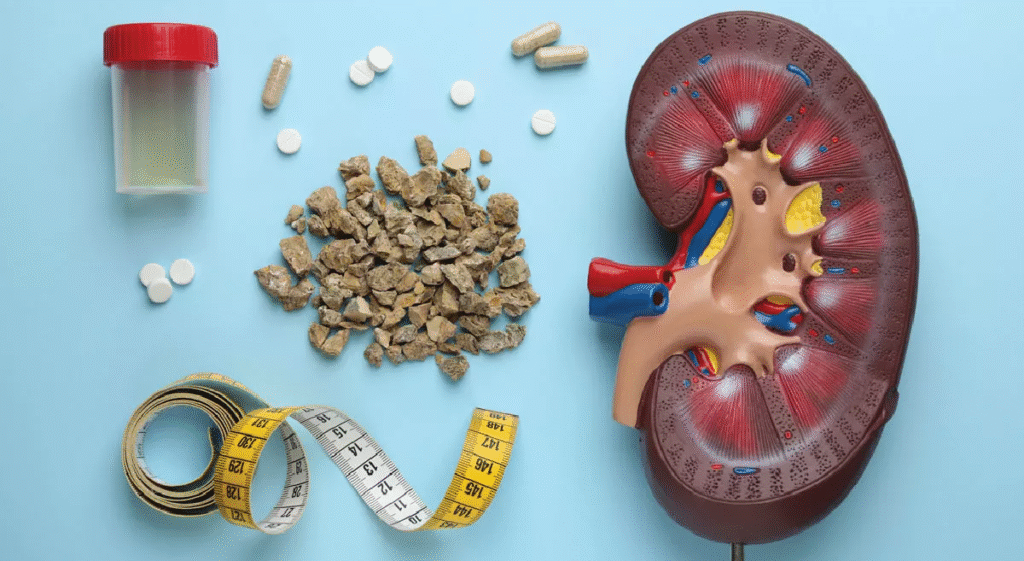
Lifestyle Modifications to Prevent Kidney Stone Recurrence
1. Drink Plenty of Water (Most Important)
Adequate hydration dilutes urine and prevents crystal formation.
• Drink 2.5–3.5 liters of water daily
• Maintain urine output above 2–2.5 liters/day
• Urine should be pale yellow or clear
• Increase fluids during summer, exercise, or illness
2. Reduce Salt Intake
Excess sodium increases calcium loss in urine → stone formation.
• Limit salt to less than 5 grams/day
• Avoid processed foods, pickles, chips, namkeen, papad, and instant foods
3. Maintain Normal Calcium Intake (Do Not Stop Calcium)
Low dietary calcium increases oxalate absorption → stone risk.
• Take normal calcium (800–1000 mg/day)
• Prefer natural sources: milk, curd, paneer (in moderation)
• Avoid unnecessary calcium supplements unless prescribed
4. Reduce Oxalate-rich Foods
Especially important for calcium oxalate stones.
Limit excess intake of:
• Spinach (palak)
• Nuts
• Tea (excess)
• Chocolate
• Soy products
• Beetroot
5. Limit Animal Protein
High animal protein increases uric acid and calcium excretion.
Reduce:
• Red meat
• Organ meat
• Excess chicken and mutton
6. Maintain Healthy Body Weight
Obesity is a major risk factor for kidney stones.
• Exercise daily (30–40 minutes)
• Follow balanced diet
• Avoid crash dieting
7. Avoid Sugary Drinks & Cola
• Soft drinks increase stone risk
• Cola contains phosphoric acid → promotes stones
• Limit sugar and packaged beverages
8. Increase Citrate-rich Foods (Natural Stone Prevention)
Citrate prevents crystal formation in urine.
Include:
• Lemon water (best natural prevention)
• Orange juice (fresh)
• Coconut water
9. Prevent Urinary Infections
• Do not hold urine for long
• Maintain hygiene
• Treat urinary infection early
• Drink adequate fluids
10. Medical Evaluation for Recurrent Kidney Stones
Patients with repeated stones should undergo:
• Stone analysis
• 24-hour urine examination
• Serum calcium and uric acid levels
• Ultrasound or CT scan
Some patients may need preventive medications such as:
• Potassium citrate
• Thiazide diuretics
• Allopurinol (for uric acid stones)
(Only under medical supervision)
Daily Routine to Prevent Kidney Stones
• Start day with lemon water
• Drink 10–12 glasses of water daily
• Reduce salt and junk food
• Limit excess tea, nuts, and spinach
• Exercise regularly
• Maintain ideal body weight
• Regular urine check if history of stones
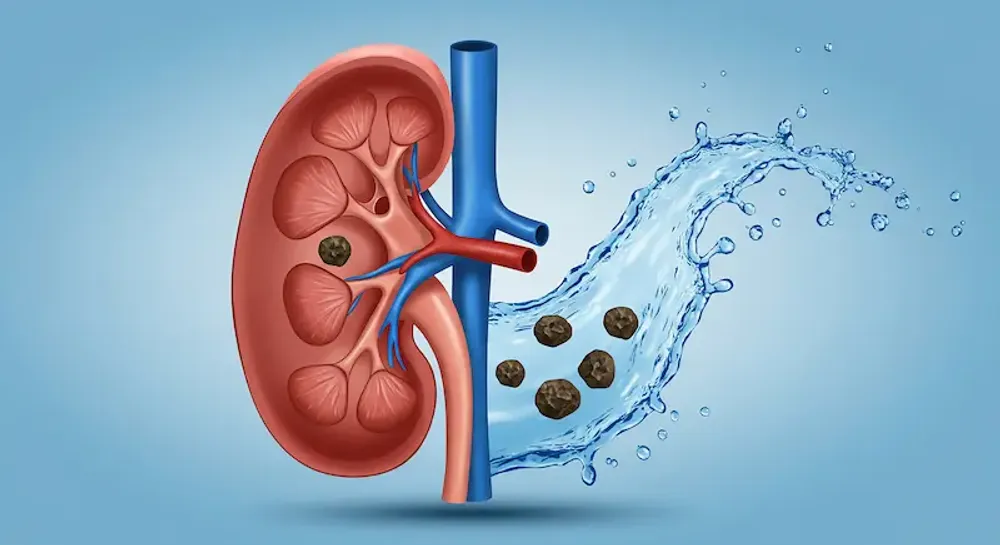
When to See a Doctor
Seek urgent medical care if you experience:
• Severe persistent pain
• Fever with chills
• Vomiting or inability to drink fluids
• Blood in urine
• Decreased urine output
Conclusion
Kidney stones are painful but highly preventable. Adequate hydration, reduced salt intake, a balanced diet, and a healthy lifestyle play a key role in preventing recurrence. Small daily changes can significantly reduce the risk of future stones and improve overall kidney health. For proper diagnosis, treatment, and long-term kidney care, it is always advisable to consult trusted Multispeciality Healthcare Services in Unnao, where experienced medical professionals provide comprehensive care and guidance to help patients maintain better kidney health and overall well-being