Post LSCS Tips for a Smooth and Healthy Recovery

1st Trimester of Pregnancy: What Should You Know
May 20, 2026
Follow These Simple Tips to Stay Hearty and Healthy in Pregnancy
June 24, 2026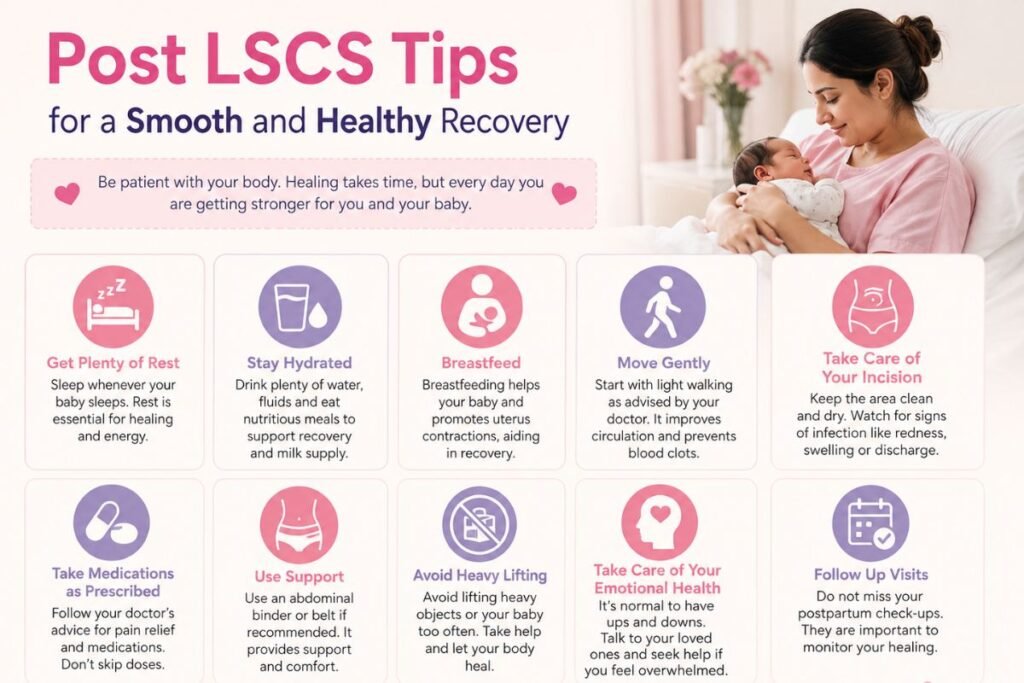
Bringing a baby into the world through a cesarean delivery is a significant experience that requires proper healing and care afterward. Following the right Post LSCS care tips can help new mothers recover comfortably while reducing the risk of complications.
For personalized guidance during recovery, consulting the Best Gynecologist Obstetrician in Unnao can provide valuable support and medical advice tailored to your needs. Whether your cesarean section was planned or performed as an emergency procedure, understanding the recovery process is essential for your physical and emotional well-being.
A Lower Segment Cesarean Section (LSCS) involves surgery to deliver a baby through incisions made in the abdomen and uterus. Since it is a major surgical procedure, recovery takes time and patience. By following appropriate Post LSCS care tips, maintaining a healthy lifestyle, and seeking medical advice when needed, mothers can gradually return to their daily activities with confidence.
Understanding Recovery After Cesarean Section
The period immediately after surgery is crucial for healing. Recovery after cesarean section typically takes between six and eight weeks, although the exact timeline varies from person to person. During the first few days, it is normal to experience pain, discomfort, fatigue, and limited mobility.
Doctors closely monitor mothers after surgery to ensure there are no complications such as excessive bleeding or infection. During this stage, proper LSCS postoperative care helps promote healing and reduces discomfort.
Many women find that the first week is the most challenging. Resting adequately, following medication instructions, and attending follow-up appointments are important parts of Recovery after cesarean section. Family support can also play a major role in helping new mothers focus on their health while caring for their newborn.
Understanding that recovery is gradual can help reduce stress and unrealistic expectations. Every mother heals at her own pace, and listening to your body is one of the most important aspects of successful healing.
Essential Post LSCS Care Tips for New Mothers
Following effective Post LSCS care tips can significantly improve your recovery experience. Here are some of the most important recommendations:
Get Plenty of Rest
Rest is one of the most critical elements of healing after surgery. Your body needs time to repair tissues and regain strength. Sleep whenever your baby sleeps and avoid overexertion during the first few weeks.
Take Prescribed Medications
Doctors often prescribe pain relievers and other medications after surgery. Taking these medications as directed can help manage discomfort and support your recovery process.
Avoid Heavy Lifting
One of the most important Post LSCS care tips is avoiding heavy lifting. Carrying objects heavier than your baby can strain abdominal muscles and delay healing. Ask family members for assistance with household chores and lifting tasks.
Stay Hydrated
Drinking enough water supports digestion, prevents constipation, and helps your body heal more efficiently. Hydration is especially important if you are breastfeeding.
Practice Good Hygiene
Maintaining cleanliness around the surgical site is essential. Follow your healthcare provider’s instructions regarding bathing and incision care.
These Cesarean delivery recovery tips can help minimize discomfort while promoting a healthier and smoother recovery journey.
Diet and Nutrition After Cesarean Delivery
Nutrition plays a vital role in Recovery after cesarean section. A balanced diet provides the nutrients needed for tissue repair, energy production, and overall health.
Focus on Protein-Rich Foods
Protein supports wound healing and muscle recovery. Include foods such as:
- Eggs
- Lean meat
- Fish
- Dairy products
- Lentils
- Beans
- Nuts
Eat Fiber-Rich Foods
Constipation is common after surgery due to medications and reduced activity. Fiber-rich foods help maintain healthy digestion and reduce discomfort.
Good sources include:
- Whole grains
- Fruits
- Vegetables
- Legumes
Include Iron-Rich Foods
Blood loss during surgery can reduce iron levels. Iron-rich foods help replenish these stores and support energy levels.
Examples include:
- Spinach
- Red meat
- Beans
- Fortified cereals
Consume Vitamin C
Vitamin C supports collagen production and wound healing. Citrus fruits, strawberries, bell peppers, and tomatoes are excellent choices.
Following these Post LSCS care tips regarding nutrition can significantly improve healing and help mothers regain strength more quickly.
A healthy diet also contributes to better Recovery after cesarean section, helping mothers feel more energized during the demanding postpartum period.
Managing Pain and Discomfort
Pain management is a key component of any Post C-section recovery guide. While discomfort is normal after surgery, there are several ways to make recovery more comfortable.
Use Pain Medication Responsibly
Take medications exactly as prescribed. Effective pain control allows you to move around more easily, which supports circulation and healing.
Support Your Abdomen
Holding a pillow against your abdomen when coughing, sneezing, or laughing can help reduce pain and protect the incision.
Wear Comfortable Clothing
Loose-fitting clothes minimize irritation around the incision area and improve comfort throughout the day.
Change Positions Carefully
Avoid sudden movements. Roll onto your side before getting out of bed to reduce strain on abdominal muscles.
A comprehensive Post C-section recovery guide emphasizes balancing activity and rest to avoid worsening pain while still encouraging gradual movement.
Physical Activity and Exercise Guidelines
Although rest is important, gentle movement is equally valuable during LSCS postoperative care.
Start Walking Early
Short walks help improve blood circulation and reduce the risk of blood clots. Walking also supports digestive health and can improve mood.
Increase Activity Gradually
As healing progresses, mothers can slowly increase their activity levels. However, high-impact exercises should be avoided until cleared by a healthcare provider.
Avoid Intense Workouts
Running, weightlifting, and abdominal exercises should generally be postponed until recovery is well underway.
Listen to Your Body
A good Post C-section recovery guide encourages mothers to stop any activity that causes pain or discomfort.
Gentle stretching and light movement can eventually become part of a healthy postpartum routine, but patience remains essential throughout the recovery period.
Wound Care and Infection Prevention
Proper incision care is a critical aspect of LSCS postoperative care.
Keep the Incision Clean and Dry
Follow medical advice regarding cleaning the incision site. Avoid using products that have not been recommended by your healthcare provider.
Watch for Signs of Infection
Seek medical attention if you notice:
- Redness around the incision
- Swelling
- Pus or unusual discharge
- Fever
- Increasing pain
Following Post LSCS care tips related to wound care can greatly reduce the risk of infection and support faster healing.
Avoid Straining the Area
Sudden movements, heavy lifting, and excessive activity can place pressure on the incision and slow recovery.
These Cesarean delivery recovery tips are essential for protecting the surgical site during the healing process.
Emotional Well-Being After LSCS
Recovery is not only physical but also emotional. Hormonal changes, sleep deprivation, and the demands of caring for a newborn can affect mental health.
Accept Help from Others
Friends and family can assist with meals, household tasks, and baby care, allowing mothers to focus on recovery.
Stay Connected
Talking with loved ones about your feelings can help reduce stress and isolation.
Prioritize Self-Care
Even small moments of relaxation can support emotional wellness.
Seek Professional Support
If feelings of sadness, anxiety, or overwhelm become persistent, consult a healthcare professional.
Successful Recovery after cesarean section includes caring for both the body and mind.
Breastfeeding After Cesarean Delivery
Breastfeeding after surgery may present some initial challenges, but many mothers successfully establish breastfeeding with patience and support.
Find Comfortable Positions
Positions such as the football hold or side-lying position can reduce pressure on the incision.
Stay Hydrated
Adequate fluid intake supports milk production and overall recovery.
Seek Lactation Support
A lactation consultant can provide guidance if difficulties arise.
These practical Cesarean delivery recovery tips can help mothers balance healing while meeting their baby’s nutritional needs.
Common Challenges During Recovery
Many women experience temporary challenges during Recovery after cesarean section, including:
Fatigue
Surgery and newborn care can be exhausting. Rest whenever possible.
Constipation
Hydration, fiber, and gentle activity can help improve bowel function.
Swelling
Mild swelling is common and often improves with movement and adequate hydration.
Emotional Ups and Downs
Hormonal changes may contribute to mood fluctuations during the postpartum period.
Understanding these challenges can help mothers approach recovery with realistic expectations and confidence.
When to Contact Your Doctor
While most recoveries proceed smoothly, some symptoms require immediate medical attention.
Contact your healthcare provider if you experience:
- Heavy bleeding
- High fever
- Severe abdominal pain
- Chest pain
- Difficulty breathing
- Persistent swelling
- Signs of incision infection
Prompt medical care can prevent complications and support a safer recovery process.
A reliable Post C-section recovery guide always emphasizes the importance of recognizing warning signs and seeking help when necessary.
Long-Term Recovery and Wellness
Healing continues even after the initial recovery period. Maintaining healthy habits supports long-term well-being.
Continue following Post LSCS care tips such as eating nutritious foods, staying active, attending medical appointments, and prioritizing self-care.
As strength returns, mothers can gradually resume normal activities while maintaining realistic expectations about the recovery timeline.
Building healthy routines during the postpartum period benefits not only recovery but also overall family wellness.
Conclusion
Recovering from a cesarean delivery requires patience, rest, and consistent self-care. By following recommended Post LSCS care tips, mothers can support healing, reduce discomfort, and lower the risk of complications. Proper nutrition, gentle activity, effective wound care, and emotional support all contribute to successful Recovery after cesarean section.
A comprehensive Post C-section recovery guide emphasizes listening to your body, seeking medical advice when needed, and allowing yourself the time necessary to heal. With the right approach and support system, most women experience a steady recovery and can fully enjoy the precious early moments of motherhood.