1st Trimester of Pregnancy: What Should You Know

How Iron Supports Maternal Health During Pregnancy
May 16, 2026
Post LSCS Tips for a Smooth and Healthy Recovery
June 5, 2026
You just saw two lines on a pregnancy test. Your heart is racing. Your mind is full of questions. What happens now? What should you be doing? Consulting the Best Gynecologist & Obstetrician in Unnao during the early weeks of pregnancy can help you understand the right care, nutrition, and medical guidance needed for a healthy journey ahead. What should you be avoiding? And what on earth is actually happening inside your body right now?
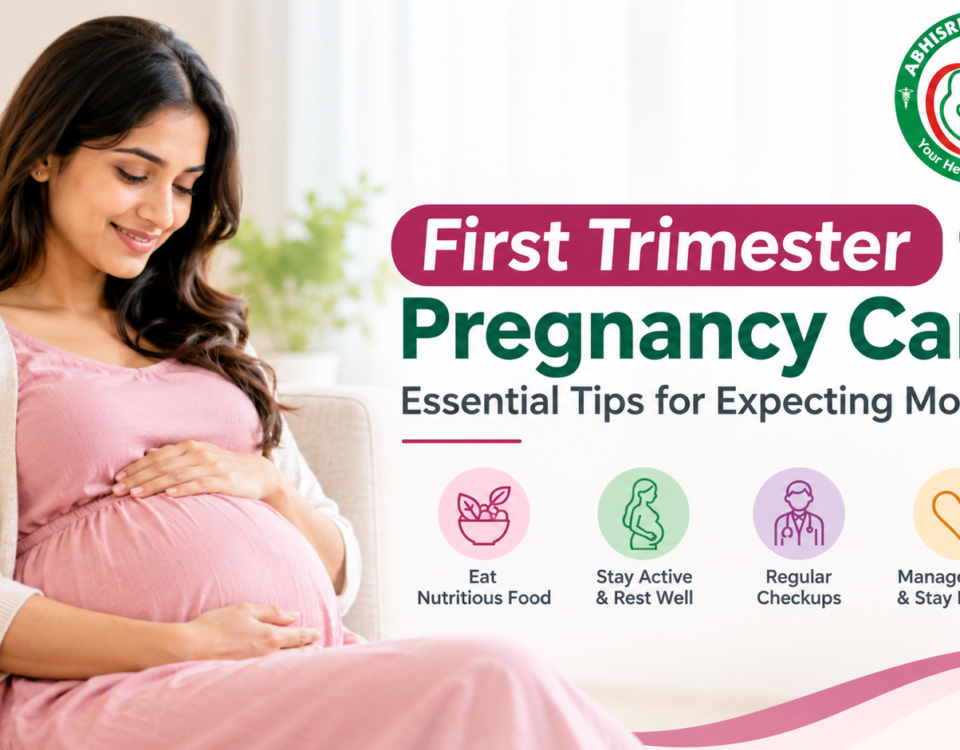
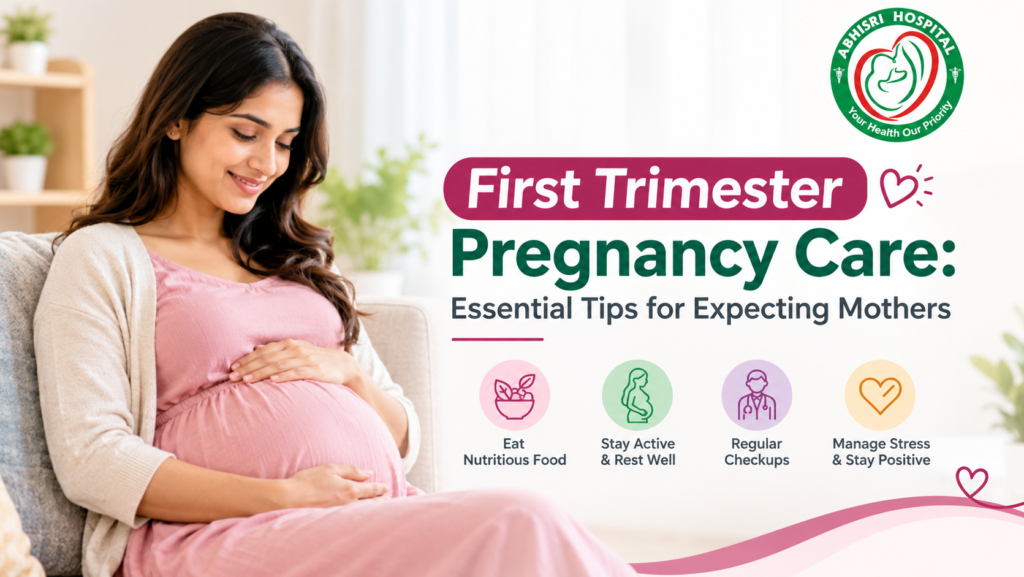
The first trimester — weeks 1 through 12 — is the most intense, most critical, and most transformative phase of your entire pregnancy. It is the foundation upon which everything else is built. And while it can feel overwhelming, it can also feel deeply exciting once you understand what is actually going on.
So let us walk through it together. Here is everything you should know about the first trimester of pregnancy.
What Exactly Is the First Trimester?
The first trimester begins on the first day of your last menstrual period and ends at the close of week 12. That means by the time most women discover they are pregnant — usually around weeks 4 to 6 — the first trimester is already well underway.
In these twelve short weeks, your body goes through more change than it will at any other point in your life. Your hormones surge. Your blood volume increases. Your uterus expands. And inside it, a single fertilised cell transforms into a fully formed human being with a beating heart, developing brain, and tiny fingers and toes.
It is nothing short of extraordinary — and knowing what to expect makes all the difference.
Prenatal Vitamins: The First Thing You Should Do Today
Before you do anything else, start taking prenatal vitamins. Not tomorrow. Today.
Prenatal vitamins are specially formulated supplements designed to fill the nutritional gaps that your diet alone cannot cover during pregnancy. The most critical ingredient in any prenatal vitamin is folic acid — 400 to 600 micrograms daily. Folic acid protects your baby against neural tube defects such as spina bifida, which develop in the very first weeks after conception, often before a woman even realises she is pregnant. This is why starting prenatal vitamins as early as possible — ideally even before conception — is so important.
But prenatal vitamins do far more than just deliver folic acid. A good prenatal vitamin also provides:
- Iron, to support your rapidly expanding blood volume and prevent anaemia
- DHA, an omega-3 fatty acid that is essential for your baby’s brain and eye development
- Calcium and Vitamin D, to support your baby’s forming bones and teeth
- Iodine, which is critical for healthy thyroid function and brain development
A common concern women have is that prenatal vitamins make nausea worse — and for some, this is true. If this happens to you, try switching to taking your prenatal vitamins in the evening with a light meal, or ask your doctor about a chewable or liquid version. The key is consistency. Do not skip them.
Morning Sickness: Why It Happens and How to Get Through It
If there is one thing most people associate with early pregnancy, it is morning sickness. And if you are currently experiencing it, you already know that the name is deeply unfair — because it strikes morning, afternoon, evening, and night with equal enthusiasm.
Morning sickness affects up to 80 percent of pregnant women and typically begins around week 6. It is caused by the sharp rise in pregnancy hormones — particularly hCG (human chorionic gonadotropin) and oestrogen — that flood your body in the first trimester. As uncomfortable as it is, morning sickness is generally considered a positive sign that your pregnancy hormones are behaving exactly as they should.
For most women, morning sickness peaks around weeks 8 to 10 and begins to ease by week 12 to 14. But in the thick of it, here is what actually helps:
Eat before you get out of bed. Keep plain crackers or dry biscuits on your nightstand. Eating something small before you even sit up can make a significant difference to how your morning starts.
Eat little and often. An empty stomach makes nausea dramatically worse. Aim to eat a small amount every two to three hours rather than three large meals.
Stay hydrated. Sip water steadily throughout the day. If plain water feels unappealing, try cold water with a slice of lemon, coconut water, or weak ginger tea.
Lean on ginger. Ginger is one of the most well-researched natural remedies for morning sickness. Ginger tea, ginger chews, ginger biscuits, or ginger capsules can all help take the edge off nausea.
Try Vitamin B6. Studies show that 10 to 25 mg of Vitamin B6 taken three times daily can meaningfully reduce the severity of morning sickness. Ask your doctor before adding any new supplement.
If your morning sickness is so severe that you cannot keep fluids down, you are losing weight, or you feel dizzy when standing, you may have a condition called hyperemesis gravidarum. This needs prompt medical attention — do not wait it out.
Embryo Development: What Is Happening Inside You Right Now
This is the part that makes the first trimester feel truly miraculous. The pace of embryo development during weeks 1 to 12 is faster than at any other point in human life.
Weeks 1 to 4: After fertilisation, the embryo travels to the uterus and implants in the uterine wall. Three distinct layers of cells form, each destined to become a specific set of organs and tissues. The neural tube — the precursor to your baby’s brain and spinal cord — begins to develop.
Weeks 5 to 6: The heart begins to beat. It is just a tiny flicker on an ultrasound screen, but it is real and it is remarkable. Embryo development at this stage is so rapid that the embryo nearly doubles in size every week. The foundations of the eyes, ears, and digestive system are taking shape.
Weeks 7 to 8: All major organs — the heart, brain, liver, kidneys, and lungs — are present in early form. Arm and leg buds appear. The face begins to develop distinct features.
Weeks 9 to 10: Fingers and toes form. The embryo is now referred to as a fetus. Embryo development has delivered a tiny human being who can make spontaneous movements — though you will not feel them yet.
Weeks 11 to 12: By the end of the first trimester, your baby is approximately 6 centimetres long and weighs around 14 grams. Every major organ system is structurally in place. The risk of miscarriage drops significantly after week 12, which is why many families choose this moment to share their news.
Understanding embryo development week by week helps you appreciate just how much is at stake — and how much is already happening — in these early weeks.
Your First Prenatal Visit: What to Expect
One of the first things on your to-do list after a positive pregnancy test should be booking your first prenatal visit. Most healthcare providers recommend scheduling this between weeks 8 and 10 of pregnancy.
Your first prenatal visit is typically the longest appointment you will have throughout your entire pregnancy — and it covers a great deal of important ground.
Your medical history. Your doctor will ask about your personal and family health history, any previous pregnancies, and any medications you currently take. This information shapes your entire care plan, so be thorough and honest.
Blood tests. A comprehensive blood panel is ordered at your first prenatal visit. This includes your blood type and Rh factor, a full blood count to check for anaemia, rubella immunity, thyroid function, and screening for infections including HIV and hepatitis B.
Urine tests. A urine sample checks for urinary tract infections and early signs of certain pregnancy complications.
An ultrasound. Depending on your clinic, your first prenatal visit may include an early ultrasound to confirm the pregnancy is in the uterus, detect a heartbeat, and calculate your due date. A detailed nuchal translucency scan is usually scheduled between weeks 11 and 13 to screen for chromosomal conditions.
Your questions. Come prepared. Write your questions down before you go. Ask about prenatal vitamins, foods to avoid, safe exercise, warning signs to watch for, and how to contact the clinic if you are concerned about something between appointments. No question is too small.
Your first prenatal visit is not just a medical appointment. It is the beginning of the relationship between you, your healthcare team, and your growing baby.
Lifestyle Changes: Protecting Your Baby From Day One
The lifestyle changes you make in the first trimester are some of the most powerful things you can do for your baby’s health — and many of them are simpler than you might think.
Stop drinking alcohol. There is no known safe amount of alcohol during pregnancy. Alcohol crosses the placenta freely and can cause lasting harm to your baby’s developing brain and organs. Eliminate it completely from the moment you know you are pregnant.
Stop smoking. Smoking significantly increases the risk of miscarriage, premature birth, low birth weight, and sudden infant death syndrome. If you smoke and need help stopping, speak to your midwife or GP — there are safe and effective support programmes available.
Limit caffeine. Keep caffeine below 200 mg per day — roughly one medium coffee. Higher intakes have been associated with increased risk of miscarriage.
Eat well. Focus on whole, nutrient-dense foods. Eat plenty of fruits, vegetables, lean proteins, wholegrains, and dairy. Avoid raw or undercooked meat, unpasteurised cheeses, high-mercury fish like shark and swordfish, and raw shellfish. These dietary lifestyle changes directly support healthy embryo development.
Move your body. Gentle exercise — walking, swimming, or prenatal yoga — is safe and beneficial for most pregnant women in the first trimester. It supports your mood, improves sleep, eases morning sickness, and keeps your body strong for the months ahead. Always check with your doctor before beginning a new exercise routine.
Prioritise rest. Growing a human being is genuinely exhausting work. Your body is producing new blood vessels, new hormones, and a new life — all at the same time. Let yourself rest without guilt. Aim for eight to nine hours of sleep per night.
Conclusion
The first trimester of pregnancy is intense, unpredictable, and full of wonder. You may feel sick, tired, emotional, and elated — sometimes all within the same hour. That is completely normal.
What you do in these twelve weeks matters enormously. Start your prenatal vitamins right away and take them every day. Manage morning sickness with practical strategies and reach out for help if it becomes severe. Follow your baby’s extraordinary embryo development week by week. Attend your first prenatal visit and use it to build a care team you trust. And commit to the lifestyle changes that protect the tiny life depending entirely on you.
You do not need to be perfect. You just need to be informed, consistent, and kind to yourself.