Vaginal Infections: Symptoms, Causes and When to See a Gynecologist

Cervical Cancer: Symptoms, Causes, Stages & Treatment Options
September 8, 2026
Heavy Periods: Causes, Symptoms and Treatment Options for Women
September 18, 2026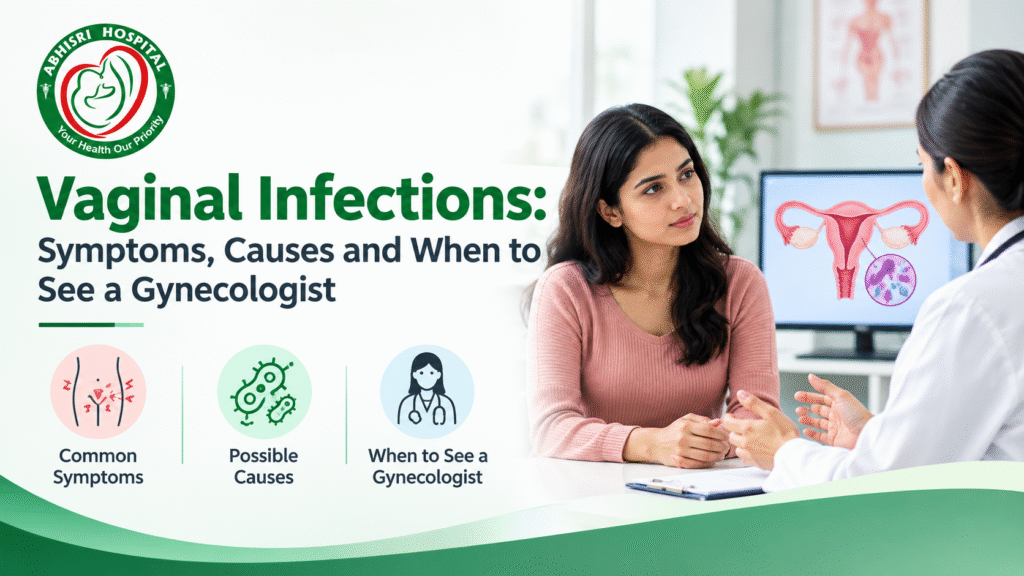
Vaginal infections can cause itching, unusual discharge, irritation, odor, soreness, or discomfort while urinating. Although many cases are common and treatable, symptoms can sometimes overlap with other gynecological conditions, making proper evaluation important. At Abhisri Hospital, women can seek professional guidance for persistent or recurring vaginal symptoms. Consulting the best Gynecologist Obstetrician in Unnao can help identify the underlying cause and determine appropriate treatment rather than relying on self-medication. Early attention can also prevent discomfort from interfering with daily activities and help women understand when a symptom requires medical care.
Vaginal infections may develop because of an imbalance in normal vaginal bacteria, yeast overgrowth, certain sexually transmitted infections, or irritation from products. The symptoms and treatment vary according to the cause, so recognizing warning signs is useful. This guide explains common types, causes, symptoms, prevention measures, and situations when seeing a gynecologist is advisable.
What Are Vaginal Infections?
Vaginal infections are conditions that affect the vagina and may result from microorganisms, changes in the normal vaginal environment, or irritation. Common examples include bacterial vaginosis, vaginal candidiasis (yeast infection), and trichomoniasis. Some infections can also be sexually transmitted.
The vagina normally contains a balance of microorganisms. Changes in this environment can allow certain organisms to multiply excessively, leading to symptoms. Importantly, vaginal discharge does not always mean there is an infection because normal discharge can change throughout the menstrual cycle.
Common Types of Vaginal Infections
Bacterial Vaginosis
Bacterial vaginosis occurs when the normal balance of vaginal bacteria changes. It may cause thin, grayish-white discharge and a noticeable fish-like odor, particularly after sex. Some women have few or no symptoms.
Yeast Infection
A vaginal yeast infection is commonly associated with an overgrowth of Candida. Typical symptoms include intense itching, redness, soreness, and thick white discharge that may resemble cottage cheese. Burning may occur, especially while urinating or during sexual activity.
Trichomoniasis
Trichomoniasis is a sexually transmitted infection caused by a parasite. Symptoms can include irritation, burning, genital redness, and unusual discharge that may be yellowish or greenish and have an unpleasant smell. Some people do not experience noticeable symptoms.
Symptoms to Watch For
Recognizing changes in vaginal health can help women decide when to seek professional advice. Common symptoms of vaginal infections include:
- Unusual vaginal discharge
- Strong or unpleasant vaginal odor
- Itching or irritation
- Redness or swelling
- Burning during urination
- Pain or discomfort during sex
- Vaginal soreness
- Changes in discharge color, consistency, or amount
Not every symptom indicates an infection. Similar complaints can occur with hormonal changes, skin conditions, urinary problems, or sexually transmitted infections. Therefore, persistent or unusual symptoms should not automatically be treated based on appearance alone.
What Causes Vaginal Infections?
Different conditions have different causes. Bacterial vaginosis is associated with an imbalance in vaginal bacteria, while yeast infections can develop when Candida overgrows.
Factors that may increase the likelihood of vaginal problems include antibiotic use, hormonal changes, pregnancy, uncontrolled diabetes, a weakened immune system, sexual activity, and certain irritating products. Wearing damp clothing for prolonged periods and using fragranced intimate products may also contribute to irritation.
Good hygiene does not mean repeatedly washing or douching the vagina. Douching can disturb the natural vaginal environment and may increase the risk of certain problems.
When Should You See a Gynecologist?
You should consider medical evaluation when symptoms are new, persistent, severe, recurrent, or different from your usual pattern. A gynecologist may ask about your symptoms, menstrual history, medications, sexual health, and previous infections before deciding whether an examination or laboratory testing is needed.
Seek prompt medical attention if you experience severe pelvic pain, fever, significant bleeding, pregnancy-related concerns, sores or blisters, or symptoms after possible exposure to a sexually transmitted infection.
Recurring vaginal infections also deserve professional evaluation because repeated self-treatment may delay diagnosis of another condition.
How Are Vaginal Infections Diagnosed?
Diagnosis depends on the symptoms and suspected cause. A healthcare professional may perform a pelvic examination and collect a vaginal sample for testing. Laboratory testing can help distinguish bacterial vaginosis, yeast infection, trichomoniasis, and other conditions that can produce similar symptoms.
Accurate diagnosis matters because treatment for one condition may not work for another. Antibiotics, antifungal medicines, or specific medications for sexually transmitted infections may be recommended depending on the diagnosis.
Women should avoid taking leftover medicines or using someone else’s prescription. Completing treatment exactly as directed is also important.
Treatment and Recovery
Treatment for vaginal infections depends on the underlying cause. Bacterial infections may require prescription antibiotics, while yeast infections may be treated with antifungal medicines. Trichomoniasis generally requires specific prescription medication, and sexual partners may also need evaluation and treatment.
During treatment, follow your healthcare professional’s instructions and avoid unnecessary vaginal products. If symptoms do not improve after treatment or return soon afterward, schedule another consultation rather than repeatedly using over-the-counter products.
Some sexually transmitted infections require partner management and temporary changes in sexual activity according to medical advice.
Practical Tips to Reduce Risk
Although not every infection can be prevented, several habits can support vaginal health:
- Keep the external genital area clean with gentle products and water.
- Avoid vaginal douching and heavily fragranced intimate products.
- Change out of wet clothes promptly.
- Wear breathable underwear and change it regularly.
- Use antibiotics only when prescribed.
- Practice safer sex and consider appropriate STI testing.
- Manage health conditions such as diabetes with professional guidance.
- Seek medical advice for recurring or unexplained symptoms.
These measures can reduce irritation and some risk factors, but they cannot guarantee that vaginal infections will never occur.
Quick Takeaway
Vaginal infections can have different causes, and symptoms such as discharge, itching, odor, and burning are not enough to determine the exact condition. Diagnosis by a qualified healthcare professional helps ensure that treatment matches the underlying problem.
If symptoms are severe, persistent, recurrent, or accompanied by fever or pelvic pain, do not delay medical evaluation. Early assessment can help identify the cause and prevent unnecessary or inappropriate treatment.
Conclusion
Understanding vaginal infections helps women recognize unusual changes and seek appropriate care without embarrassment or delay. While many causes are treatable, similar symptoms can occur with different conditions, so professional diagnosis is important. Avoid self-medication, maintain gentle hygiene, and seek medical advice when symptoms persist or return. For women seeking gynecological guidance and evaluation, Abhisri Hospital can provide access to professional care and help determine an appropriate treatment approach based on individual symptoms and clinical findings.
Frequently Asked Questions
1. Can vaginal infections go away on their own?
Some mild symptoms may resolve, but others require specific treatment. Persistent or recurring symptoms should be evaluated by a healthcare professional.
2. Is unusual discharge always a sign of infection?
No. Normal discharge can change during the menstrual cycle. Changes in color, odor, consistency, or associated symptoms may warrant evaluation.
3. Can antibiotics cause a yeast infection?
Yes. Antibiotics can alter normal vaginal bacteria, potentially allowing Candida to multiply excessively in some women.
4. Should I self-treat recurring symptoms?
Repeated self-treatment is not recommended without professional advice because different conditions can produce similar symptoms.
5. When should I urgently see a doctor?
Seek prompt medical attention for severe pelvic pain, fever, significant bleeding, pregnancy-related concerns, genital sores, or possible STI exposure.