Kidney-Friendly Diet: What to Eat and What to Avoid

Uterine Fibroids: Symptoms, Causes and Treatment
October 3, 2026
Protein in Urine: Causes and What It Means
October 8, 2026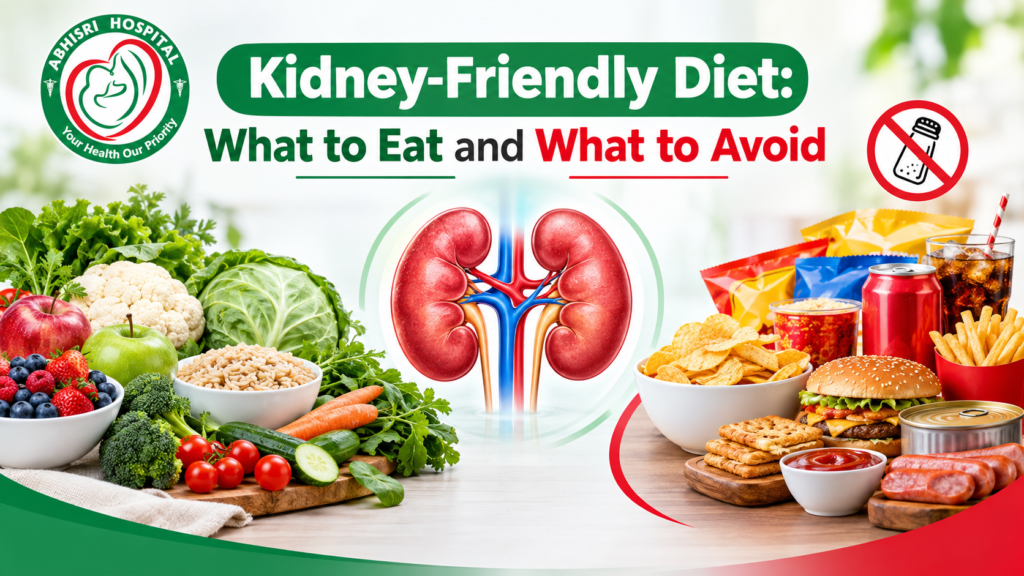
A kidney-friendly diet can help people with kidney disease manage important nutrients such as sodium, potassium, phosphorus, and protein. The right food choices depend on kidney function, medications, laboratory results, and whether a person is receiving dialysis.
If you are looking for specialized care, Kidney Dialysis in Unnao is an important service to discuss with a qualified healthcare professional. Abhisri Hospital provides medical guidance for patients who need kidney and dialysis-related care.
Kidney-Friendly Diet: What Should You Eat?
The best eating pattern for kidney health is not identical for everyone. Someone with early-stage chronic kidney disease may have different nutritional needs from a person with advanced kidney disease or someone receiving dialysis. A doctor or renal dietitian can recommend appropriate portions based on kidney function and blood test results.
Choose Fresh, Less-Processed Foods
Fresh foods are generally preferable because packaged and processed products can contain large amounts of sodium and phosphorus additives. Depending on your individual requirements, suitable choices may include:
- Fresh fruits and vegetables in portions recommended by your healthcare provider
- Rice, pasta, oats, or other grains appropriate for your dietary needs
- Fresh poultry, fish, eggs, or other protein sources in controlled portions
- Unsalted nuts or seeds when potassium and phosphorus restrictions allow
- Homemade meals prepared with limited salt
Reading nutrition labels is especially useful. Look for sodium content and check ingredient lists for phosphorus-containing additives.
Select Protein Carefully
Protein requirements vary according to kidney function and treatment. People who are not on dialysis may sometimes need to moderate protein intake, while people receiving dialysis may need more protein because dialysis can increase protein requirements.
Do not significantly reduce protein without professional advice. Eating too little can contribute to muscle loss and poor nutritional status, while excessive protein may not be appropriate for some people with reduced kidney function.
What Foods Should You Limit?
Certain foods may need to be reduced because they can increase sodium, potassium, phosphorus, or other nutrients that the kidneys have difficulty regulating. However, restrictions should be personalized rather than applied automatically to everyone with kidney disease.
Limit High-Sodium Foods
Excess sodium can contribute to fluid retention and high blood pressure, which may place additional strain on the kidneys. Common foods to limit include:
- Pickles, papad, and salty snacks
- Packaged soups and instant noodles
- Processed meats such as sausages and certain cured products
- Fast food and heavily salted restaurant meals
- Chips, crackers, and packaged savory foods
Instead, flavor meals with herbs, spices, lemon, garlic, or other salt-free seasonings when appropriate.
Watch Potassium and Phosphorus
Potassium and phosphorus restrictions depend heavily on blood test results and the stage of kidney disease. Foods that may need monitoring include bananas, oranges, potatoes, tomatoes, dairy products, cola beverages, processed meats, and foods containing phosphate additives.
This does not mean these foods are automatically unhealthy or forbidden. A healthcare professional should determine whether restriction is necessary and how much is appropriate.
Practical Tips for a Kidney-Friendly Diet
Making dietary changes becomes easier when you focus on simple, repeatable habits rather than trying to change everything at once.
Start by cooking more meals at home. This gives you better control over salt, sauces, portion sizes, and ingredients. Keep a food diary for several days if your doctor or dietitian recommends it. It can help identify sources of sodium, processed foods, and eating patterns that may need adjustment.
When shopping, compare nutrition labels and choose products with lower sodium when available. Be cautious with salt substitutes because some contain potassium chloride, which may not be suitable for people with potassium restrictions.
Hydration also requires individualized advice. Some people with kidney disease need to limit fluids, particularly when kidney function is severely reduced or when dialysis is involved. Others may not have a fluid restriction. Follow the fluid recommendation provided by your healthcare team rather than forcing yourself to drink a fixed amount.
Kidney-Friendly Diet for People on Dialysis
People receiving dialysis often have different nutritional requirements. Dialysis may remove some nutrients and waste products from the bloodstream, making adequate protein and calorie intake important. At the same time, fluid, sodium, potassium, and phosphorus may need careful management.
Plan Meals Around Medical Advice
Keep track of your dialysis schedule, prescribed fluid allowance, and recommended nutrient limits. Regular blood tests can help your healthcare team determine whether dietary adjustments are needed.
Avoid One-Size-Fits-All Restrictions
Internet food lists can be misleading because a food that needs restriction for one patient may be perfectly reasonable for another. Dialysis patients should follow a personalized plan created by their nephrologist or renal dietitian.
Abhisri Hospital can be a useful healthcare resource for patients seeking professional evaluation and kidney-related treatment. Dietary recommendations should always be considered alongside medical treatment, prescribed medicines, and laboratory monitoring.
Foods to Avoid or Reduce: Quick Reference
Rather than memorizing a long list, focus on the categories that commonly require attention:
- High-sodium foods: Processed meats, packaged snacks, pickles, instant foods, and heavily salted meals
- Phosphorus additives: Processed foods and beverages containing ingredients with “phos” in the name
- High-potassium foods: Certain fruits, vegetables, dairy products, and other foods when blood potassium is elevated
- Excess protein: Large portions of meat or protein supplements when protein restriction has been advised
- Excess fluids: Only when your healthcare team has prescribed a fluid restriction
The most important point is that restrictions should be based on your medical condition, blood results, kidney function, and treatment plan.
How to Make Kidney-Smart Food Choices
A practical approach is to build meals around fresh ingredients, controlled portions, and the nutrient limits recommended by your healthcare provider. Reduce packaged foods, avoid adding excessive salt, and ask before using supplements or herbal products.
Keep regular appointments and discuss changes in appetite, swelling, blood pressure, urine output, or weight with your medical team. These symptoms can have multiple causes and should not be managed through diet alone.
If you have diabetes or high blood pressure, controlling these conditions is also important because they are major contributors to chronic kidney disease. Your overall plan may therefore include medication, physical activity, blood pressure monitoring, blood sugar management, and nutritional changes.
Quick Takeaways
- Reduce sodium by choosing fresh foods and limiting processed products.
- Potassium and phosphorus restrictions should be based on medical advice and blood tests.
- Protein needs vary depending on kidney function and whether you receive dialysis.
- Fluid intake should follow your individual medical recommendation.
- Read food labels and watch for sodium and phosphorus additives.
- Avoid self-prescribing supplements or making major dietary changes without professional guidance.
Conclusion
A kidney-friendly diet is most effective when it is personalized to your kidney function, blood test results, medications, and treatment needs. Instead of eliminating large groups of foods without guidance, focus on controlling sodium, monitoring potassium and phosphorus when necessary, choosing appropriate protein portions, and following your recommended fluid intake.
For professional kidney care and dialysis-related support, Abhisri Hospital can help patients access appropriate medical evaluation and treatment. Always consult your nephrologist or renal dietitian before making significant dietary changes, especially if you have advanced kidney disease or are receiving dialysis.
FAQs
1. What is a kidney-friendly diet?
It is an individualized eating plan designed to help manage nutrients such as sodium, potassium, phosphorus, protein, and fluids according to a person’s kidney function and medical needs.
2. Can people with kidney disease eat fruits?
Yes, but the appropriate fruits and portions depend on kidney function and blood potassium levels. A healthcare professional can recommend suitable choices.
3. Should kidney patients avoid salt completely?
Not necessarily, but reducing sodium is commonly recommended. Your healthcare provider can advise you on the appropriate daily amount.
4. Do dialysis patients need more protein?
Many people on dialysis have higher protein needs than people with earlier-stage kidney disease, but the exact amount should be determined by their healthcare team.
5. Should I drink more water to protect my kidneys?
Not everyone with kidney disease should increase fluid intake. Some patients require a fluid restriction, so follow the recommendation provided by your doctor.