Uterine Fibroids: Symptoms, Causes and Treatment

Missed Periods but Not Pregnant: Possible Causes
October 1, 2026
Kidney-Friendly Diet: What to Eat and What to Avoid
October 7, 2026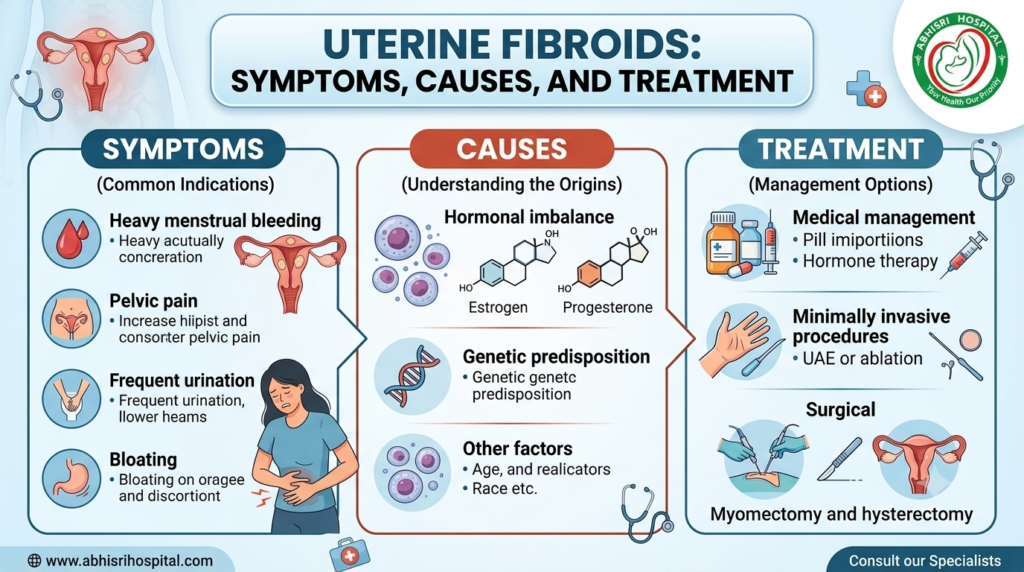
Uterine fibroids are common, non-cancerous growths that develop in or around the uterus. They may cause no symptoms at all, but some women experience heavy menstrual bleeding, pelvic pressure, pain, frequent urination, or fertility-related concerns.
If you are experiencing unusual menstrual changes, consulting a qualified Gynecologist Obstetrician in Unnao can help identify the cause. Abhisri Hospital provides gynecological care in Unnao, including evaluation and treatment for fibroids and other women’s health concerns.
Uterine Fibroids: What Are They?
Fibroids are benign growths made primarily from muscle and fibrous tissue that develop within the uterus or on its outer surface. They can vary greatly in size, number, and location. Some are only a few millimetres in size, while others can become considerably larger. Their effect on health often depends on where they develop and whether they interfere with the uterine cavity or press against nearby organs.
Common Types of Fibroids
Doctors commonly describe fibroids according to their location:
- Intramural: These develop within the muscular wall of the uterus and are among the most common types.
- Subserosal: These grow toward the outside of the uterus and may create pressure on the bladder or bowel.
- Submucosal: These develop beneath the inner lining of the uterus and may be more strongly associated with heavy bleeding and some fertility problems.
Do Fibroids Always Need Treatment?
No. Treatment is not necessarily required when fibroids cause no symptoms or only mild problems. A doctor may recommend observation and follow-up, depending on the size, location, symptoms, age, and reproductive plans of the patient.
Uterine Fibroids: Symptoms to Watch For
The symptoms can differ from one person to another. Some women have no noticeable symptoms, while others experience problems that affect daily activities, work, sleep, or relationships.
Heavy or Painful Periods
One of the most noticeable symptoms is unusually heavy or prolonged menstrual bleeding. Some women may also experience painful periods, pelvic discomfort, or bleeding that interferes with everyday activities. Persistent heavy bleeding can contribute to iron-deficiency anaemia, which may cause tiredness, weakness, or shortness of breath.
Pressure, Pain and Urinary Changes
Larger fibroids can put pressure on nearby organs. Possible symptoms include lower abdominal or pelvic pain, lower back discomfort, bloating, pain during sex, constipation, or a frequent and urgent need to urinate. Symptoms can depend significantly on the fibroid’s size and position.
Quick takeaway: Heavy periods, persistent pelvic pain, increasing abdominal pressure, frequent urination, or unexplained changes in your menstrual cycle should not simply be ignored. A medical evaluation can help determine whether fibroids or another condition is responsible.
What Causes Fibroids and Who Is at Risk?
The exact cause of fibroid development is not fully understood. Hormonal and genetic factors appear to play important roles, and fibroids are more common before menopause. A family history of fibroids may also increase the likelihood of developing them. Other reported risk factors include being overweight or having certain metabolic conditions.
Age and reproductive history can also influence risk. However, having a risk factor does not mean that a person will definitely develop fibroids. Similarly, symptoms cannot reliably establish a diagnosis without appropriate medical assessment.
How Are Fibroids Diagnosed?
Diagnosis usually begins with a discussion about menstrual symptoms, pain, urinary or bowel changes, pregnancy history, and other relevant health concerns. A physical examination may also be performed when appropriate.
Ultrasound Examination
Ultrasound is commonly used to identify fibroids and assess their size, number, and location. Depending on the situation, an abdominal or transvaginal ultrasound may be recommended.
When Additional Testing May Be Needed
Some patients may need additional imaging or procedures depending on their symptoms and treatment plans. MRI may be considered in selected cases, particularly when more detailed information about the uterus and fibroids is required before certain procedures.
Treatment Options for Fibroids
Treatment is individualized rather than based on fibroid size alone. Doctors consider symptoms, location and number of fibroids, age, overall health, and whether the patient wants to become pregnant.
Medicines and Symptom Management
Medicines may be used to manage heavy bleeding or pain. Depending on the individual’s situation, doctors may recommend pain-relieving medicines, medicines that reduce menstrual bleeding, or hormonal treatments. Some medicines control symptoms without removing the fibroids themselves.
Procedures and Surgery
When symptoms are significant, persistent, or difficult to control, procedures may be considered. Myomectomy removes fibroids while preserving the uterus and may be considered for women who wish to retain fertility. Uterine artery embolization reduces blood flow to fibroids so they can shrink.
Hysterectomy removes the uterus and is a definitive treatment, but it ends the ability to become pregnant. The appropriate option depends on individual circumstances and reproductive plans.
Abhisri Hospital’s gynecology services include evaluation of fibroids and procedures such as myomectomy and laparoscopic gynecological surgery, according to its published service information. Patients should discuss the potential benefits, limitations, risks, recovery time, and fertility implications of any procedure with their treating doctor.
Practical Tips for Managing Fibroid Symptoms
If you have been diagnosed with fibroids or are experiencing symptoms, consider these practical steps:
- Track your periods: Record bleeding duration, heaviness, pain, and any bleeding between periods.
- Discuss heavy bleeding: Ask your doctor whether you should be checked for anaemia or iron deficiency.
- Keep appointments: Follow-up examinations or imaging may help monitor changes when immediate treatment is not required.
- Discuss pregnancy plans early: Some treatments may affect fertility or future pregnancy, so reproductive goals should be part of treatment discussions.
- Do not self-medicate: Medicines for pain or heavy bleeding should be used according to appropriate medical advice.
- Seek medical care for persistent symptoms: Changes that interfere with daily life deserve professional evaluation.
When Should You See a Doctor?
Schedule a medical consultation if periods become unusually heavy or painful, pelvic or abdominal pain persists, you experience pressure symptoms, or urinary and bowel changes develop without an obvious explanation. Medical attention is especially important when heavy bleeding is causing weakness, fatigue, or other possible signs of anaemia.
A sudden or severe change in pain or bleeding should be assessed promptly. Symptoms that appear similar to fibroids can also occur with other gynecological conditions, so diagnosis should not be based on symptoms alone.
Conclusion
Uterine fibroids can range from small, symptom-free growths to conditions that cause heavy bleeding, pain, pressure, or other reproductive health concerns. Because symptoms and treatment needs vary, professional assessment is important before deciding whether monitoring, medication, a minimally invasive procedure, or surgery is appropriate. Abhisri Hospital in Unnao offers gynecology and obstetric care, including evaluation and treatment services for fibroids.
FAQs
1. Are fibroids cancerous?
Most fibroids are benign, meaning they are non-cancerous growths. However, unusual or rapidly changing symptoms should always be evaluated by a doctor.
2. Can fibroids cause heavy periods?
Yes. Heavy or prolonged menstrual bleeding is a common symptom, particularly with certain fibroid locations.
3. Can fibroids affect fertility?
Most women with fibroids do not necessarily have fertility problems, but fibroids in certain locations can affect fertility or pregnancy. Your doctor can assess whether their position or size is relevant to your reproductive plans.
4. Do all fibroids require surgery?
No. If symptoms are absent or mild, monitoring may be appropriate. Surgery or another procedure may be considered when symptoms are significant or other treatments are unsuitable or ineffective.
5. How are fibroids usually diagnosed?
A doctor may assess your symptoms and perform an examination, followed by an ultrasound to identify the size, number, and location of fibroids. Additional tests may be recommended in selected cases.