Embryo Transfer Process: Complete Guide to IVF Success

High Blood Pressure and Kidney Damage: Understanding the Risks and Prevention
April 29, 2026
What Are Irregular Periods?
May 2, 2026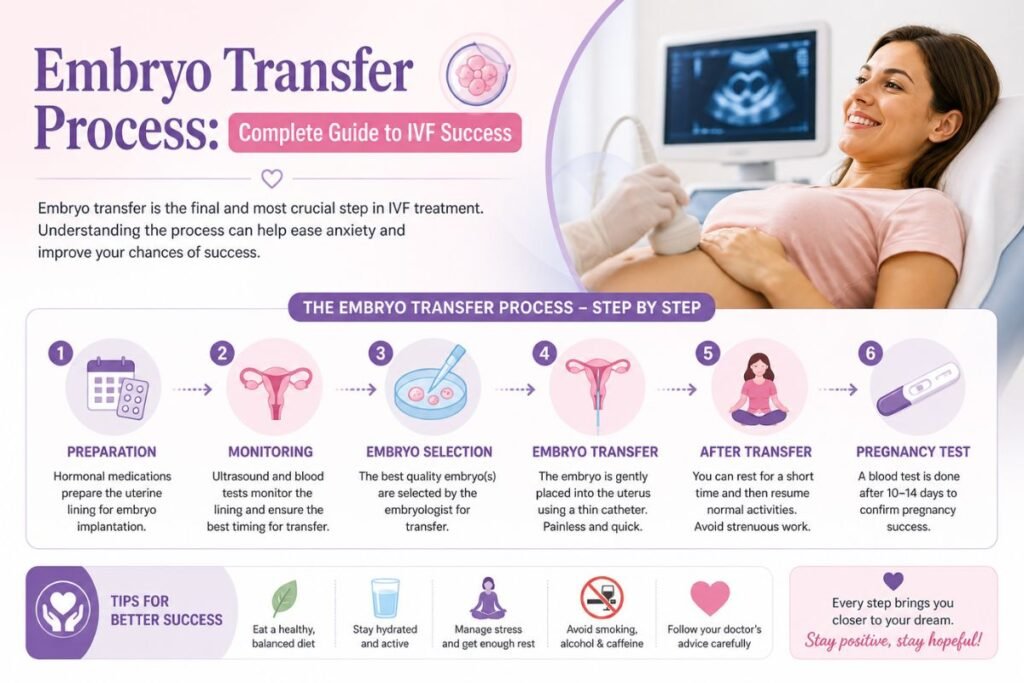
The embryo transfer process is one of the most important stages in fertility treatment. For couples undergoing IVF, this step brings hope and excitement because it is the moment when a healthy embryo is placed into the uterus for implantation. Understanding the IVF embryo transfer procedure can reduce anxiety and help patients feel prepared for the journey ahead.
Many people wonder about the steps of embryo transfer, what happens during the appointment, how long it takes, and what to expect afterward. Consulting the Best Gynecologist & Obstetrician in Unnao can help patients receive expert guidance and personalized fertility care during this important stage. Whether you are planning treatment or already in the IVF cycle, learning about embryo transfer after IVF can make the experience smoother and more comfortable.
In this guide, we will explain everything in detail, including preparation, the procedure, recovery, and successful embryo transfer tips to improve confidence during treatment.
What Is the Embryo Transfer Process?
The embryo transfer process is the stage of IVF where one or more embryos created in the laboratory are transferred into the woman’s uterus. This usually happens after eggs are collected, fertilized, and allowed to develop for a few days.
The goal is for the embryo to implant into the uterine lining and develop into a healthy pregnancy. It is a simple and usually painless procedure performed by a fertility specialist.
The IVF embryo transfer procedure can involve either fresh embryos or frozen embryos, depending on the treatment plan. Fresh embryo transfer happens within the same IVF cycle, while frozen embryo transfer occurs in a later cycle after the embryo has been cryopreserved.
Why Is Embryo Transfer Important?
The transfer is the final clinical step before pregnancy testing. Even if egg retrieval and fertilization go well, implantation is necessary for success. This is why the steps of embryo transfer are handled carefully by fertility experts using advanced technology.
Factors that can affect success include:
- Embryo quality
- Age of the woman
- Uterine health
- Hormone levels
- Endometrial thickness
- Lifestyle factors
Because of these factors, doctors often personalize the embryo transfer after IVF plan for each patient.
Preparation Before the IVF Embryo Transfer Procedure
Proper preparation can improve comfort and readiness. Before the IVF embryo transfer procedure, patients may receive medications such as progesterone to prepare the uterine lining.
Common Preparations Include:
1. Ultrasound Monitoring
Doctors check the uterine lining thickness to ensure it is suitable for implantation.
2. Medication Support
Hormonal medicines may be prescribed to support the uterus.
3. Full Bladder Requirement
Many clinics ask patients to arrive with a moderately full bladder because it helps guide the catheter placement during transfer.
4. Healthy Lifestyle
Eating nutritious food, staying hydrated, and reducing stress are considered successful embryo transfer tips.
5. Avoid Perfumes or Strong Fragrances
Some fertility clinics request fragrance-free visits because embryos are sensitive in laboratory environments.
Steps of Embryo Transfer
Understanding the steps of embryo transfer can reduce fear and uncertainty. The actual procedure is usually quick and completed within 15 to 30 minutes.
Step 1: Arrival at the Clinic
You will check in, review instructions, and may be asked to relax for some time before the procedure.
Step 2: Embryo Selection
The embryologist selects the healthiest embryo based on development and quality.
Step 3: Positioning for Procedure
You will lie on an examination table similar to a gynecological exam.
Step 4: Catheter Insertion
A thin soft catheter is gently passed through the cervix into the uterus.
Step 5: Embryo Placement
The embryo is carefully released into the uterus using ultrasound guidance.
Step 6: Catheter Check
The embryologist checks the catheter under a microscope to confirm the embryo was transferred successfully.
These are the standard steps of embryo transfer followed in most fertility clinics.
Is the Embryo Transfer Process Painful?
The embryo transfer process is generally not painful. Most women describe it as mild discomfort similar to a Pap smear or routine gynecological examination.
Because anesthesia is usually not needed, patients remain awake during the IVF embryo transfer procedure. Some women may feel:
- Mild cramping
- Pressure from a full bladder
- Slight spotting afterward
Serious pain is uncommon. If you feel severe discomfort, inform your doctor immediately.
What Happens After Embryo Transfer After IVF?
The days after embryo transfer after IVF are emotionally important. Many patients call this the “two-week wait” because they must wait before taking a pregnancy test.
Aftercare May Include:
- Continue prescribed medications
- Light daily activities
- Avoid smoking and alcohol
- Stay hydrated
- Reduce stress
Some women experience mild cramps, bloating, fatigue, or breast tenderness. These symptoms can be due to hormones and do not always indicate pregnancy.
Successful Embryo Transfer Tips
While no method guarantees pregnancy, following healthy habits can support the process. Here are some successful embryo transfer tips often recommended by fertility specialists:
1. Follow Doctor Instructions Carefully
Take medications exactly as prescribed.
2. Rest, But Do Not Stay in Bed All Day
Normal light movement is usually safe after the embryo transfer process.
3. Eat Balanced Meals
Choose protein, fruits, vegetables, whole grains, and hydration.
4. Manage Stress
Meditation, deep breathing, and positive support can help emotional well-being.
5. Avoid Heavy Exercise
Skip intense workouts during the early days after embryo transfer after IVF.
6. Limit Caffeine
Moderation is generally advised.
7. Attend Follow-Up Appointments
Testing and monitoring are essential after the IVF embryo transfer procedure.
Fresh vs Frozen Embryo Transfer
Many couples ask whether fresh or frozen transfer is better. Both can be successful.
Fresh Transfer
- Done in same IVF cycle
- Faster timeline
- Useful in selected cases
Frozen Transfer
- Embryo stored and transferred later
- Allows body to recover from stimulation
- Often chosen when hormone levels are high
Your fertility doctor will recommend the best embryo transfer process based on your health and embryo quality.
Common Myths About Embryo Transfer
Myth 1: You Must Stay in Bed for Days
False. Light movement is generally safe after the IVF embryo transfer procedure.
Myth 2: Sneezing or Coughing Can Remove the Embryo
False. The uterus protects the embryo after transfer.
Myth 3: Symptoms Mean Success
Not always. Some pregnancies have no early symptoms after embryo transfer after IVF.
Myth 4: More Embryos Always Means Better Chances
Not necessarily. Single embryo transfer is often recommended for safety.
When to Call the Doctor
Contact your clinic if you experience:
- Heavy bleeding
- Severe abdominal pain
- Fever
- Difficulty breathing
- Extreme bloating
- Fainting
These symptoms need medical review after the embryo transfer process.
Emotional Care During the Two-Week Wait
Waiting for results can be stressful. Consider:
- Limiting repeated internet searches
- Staying busy with light routines
- Talking to your partner or counselor
- Practicing mindfulness
- Focusing on things you can control
Emotional wellness is one of the overlooked successful embryo transfer tips.
Frequently Asked Questions
How long does the embryo transfer process take?
The actual procedure often takes 10–15 minutes, though the clinic visit may be longer.
Can I go to work after the IVF embryo transfer procedure?
Many women return to normal desk work the same day or next day.
What should I avoid after embryo transfer after IVF?
Avoid smoking, alcohol, heavy lifting, and strenuous exercise.
Are the steps of embryo transfer safe?
Yes, it is a routine and safe fertility procedure when done by trained specialists.
Final Thoughts
The embryo transfer process is a hopeful milestone in fertility treatment. It is quick, safe, and carefully performed using modern medical techniques. Understanding the IVF embryo transfer procedure, the steps of embryo transfer, and what to expect during embryo transfer after IVF can help you feel more prepared.
While success depends on many factors, following healthy habits and these successful embryo transfer tips can support your journey. Stay connected with your fertility team, trust the process, and take care of your emotional and physical health during this important stage.