ICU Is Not the End: The Truth Every Family Must Know

High Potassium Can Cause Sudden Cardiac Arrest: What Every Patient & Attendant Should Know
August 11, 2026
Emergency Dialysis: When Every Minute Counts
August 22, 2026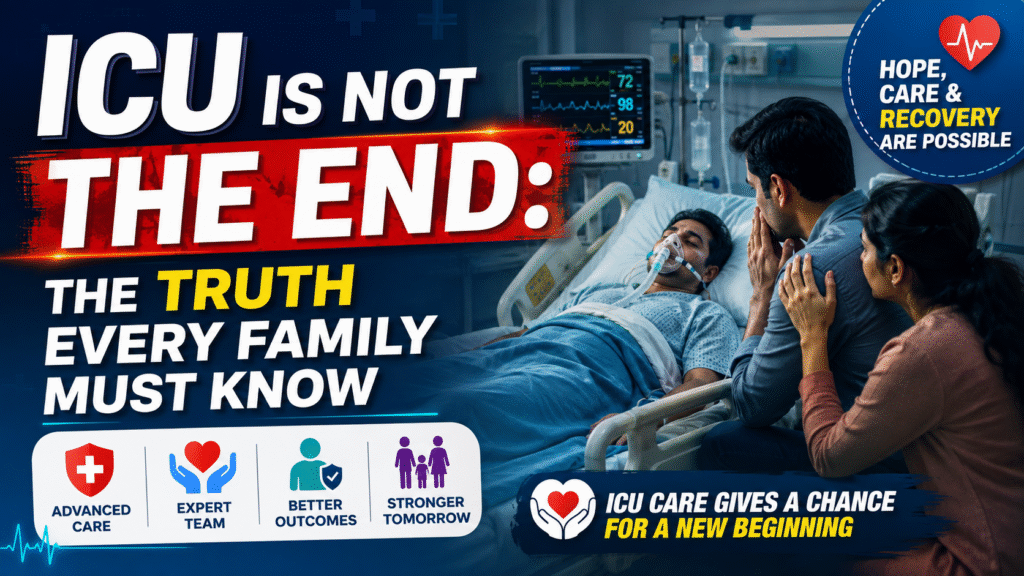
By Dr. Rishabh Gautam, MBBS, DA, FICM
Anaesthetist | Intensivist & Pain Specialist
When a doctor says, “The patient needs ICU care,” it is natural for families to become frightened. For many people, the word ICU (Intensive Care Unit) immediately creates images of ventilators, serious illness, and uncertainty. Families looking for the best ICU hospital in Unnao may also worry that ICU admission means recovery is unlikely.
That is not necessarily true.
An ICU is not a place where patients go because treatment has stopped working. It is a place where patients receive closer monitoring, advanced treatment and life support when necessary—often giving them the best possible chance of recovery.
What Exactly Is an ICU?
An Intensive Care Unit is a specialized area of a hospital designed for patients who need more monitoring or treatment than can safely be provided in a general ward.
ICU patients may require:
- Continuous monitoring of heart rate, blood pressure, and oxygen levels
- Oxygen therapy or ventilatory support
- Medicines to maintain blood pressure
- Treatment for severe infections or sepsis
- Close monitoring of kidney function and urine output
- Management of serious electrolyte abnormalities
- Blood transfusion or other supportive therapies
- Care after major surgery or trauma
- Management of multiple organ dysfunction
Importantly, not every ICU patient is on a ventilator.
Some patients may need ICU care simply because their condition can change quickly and requires continuous observation.
Why Does a Patient Need ICU Admission?
There are many reasons.
A patient may need intensive care because of:
1. Severe Infection or Sepsis
Severe infections can affect blood pressure, breathing, and the function of vital organs. Early recognition and aggressive treatment can significantly influence outcomes.
2. Breathing Problems
Patients with severe pneumonia, asthma, COPD exacerbation, pulmonary edema or other respiratory conditions may require high-flow oxygen, non-invasive ventilation or mechanical ventilation.
3. Heart Problems
Certain heart conditions, abnormal heart rhythms, heart attacks or severe heart failure may require continuous cardiac monitoring and intensive treatment.
4. Kidney Problems and Electrolyte Disturbances
Severe kidney dysfunction, dangerously high potassium, severe sodium abnormalities, or acid-base disturbances may require close monitoring and sometimes dialysis.
5. Major Trauma
Patients with serious injuries, multiple fractures, chest trauma, head injuries, or internal bleeding may need ICU observation even when immediate surgery is not required.
6. After Major Surgery
Some patients require temporary ICU monitoring after complex surgery, particularly when there are concerns regarding breathing, circulation, or other organ functions.
ICU Does Not Automatically Mean Ventilator
This is one of the biggest misconceptions families have.
ICU admission ≠ ventilator.
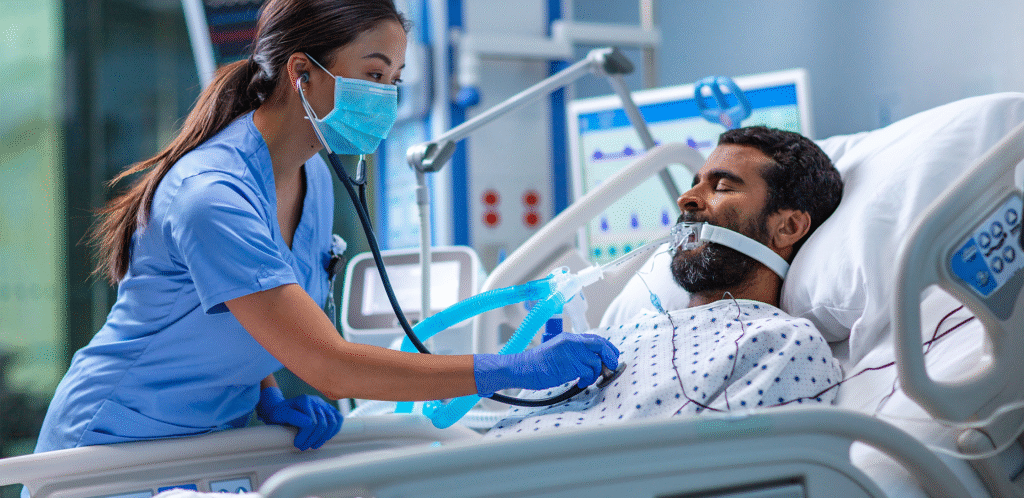
A patient may be admitted to the ICU for monitoring and treatment while breathing normally on their own.
Some patients may require:
Nasal oxygen → High-flow oxygen → Non-invasive ventilation → Mechanical ventilation
The treatment depends on the patient’s condition.
Doctors do not put every ICU patient on a ventilator.
What Does a Ventilator Actually Mean?
A ventilator is a machine that helps a patient breathe when their lungs or breathing muscles cannot provide adequate ventilation.
Being placed on a ventilator means the patient is seriously ill, but it does not automatically mean that recovery is impossible.
Many patients require mechanical ventilation temporarily and are successfully weaned off it once the underlying problem improves.
The duration can vary widely depending on the illness, age, organ function, and response to treatment.
The First 24–48 Hours Can Be Important
In many critical illnesses, the initial period is particularly important.
During this time, the ICU team may:
- Identify the underlying cause of deterioration
- Stabilize blood pressure and breathing
- Treat infection when appropriate
- Correct electrolyte and metabolic abnormalities
- Monitor organ function
- Assess response to treatment
- Adjust medications and supportive therapies
However, families should understand that every patient is different. Recovery cannot always be predicted by a fixed timeline.
What Determines ICU Survival?
There is no single factor that determines whether a patient will survive.
Important factors include:
The Underlying Disease
A reversible condition may have a much better prognosis than irreversible advanced organ failure.
Age and General Health
A previously healthy patient may tolerate critical illness differently from someone with severe underlying heart, kidney, lung, or liver disease.
Number of Organs Affected
When several vital organs are failing simultaneously, the illness becomes more complicated.
How Early Treatment Begins
Early recognition and appropriate treatment can be extremely important in conditions such as sepsis, respiratory failure, and shock.
Response to Treatment
Doctors continuously assess whether blood pressure, oxygenation, urine output, consciousness, laboratory parameters, and organ function are improving.
Complications
Hospital-acquired infections, bleeding, blood clots, kidney injury, delirium, and other complications can influence recovery.
Why Do ICU Patients Need So Many Machines?
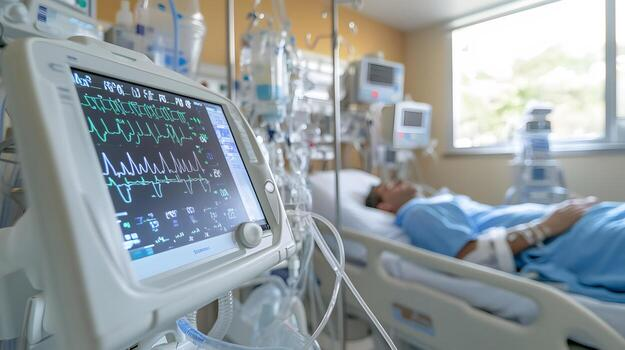
The monitors and machines around an ICU bed can look frightening.
But each device has a purpose.
A monitor may continuously track:
- Heart rhythm
- Oxygen saturation
- Blood pressure
- Respiratory rate
- Temperature
Other equipment may help with:
- Oxygen delivery
- Breathing
- Infusion of medications
- Nutrition
- Kidney support
- Monitoring urine output
More machines do not necessarily mean that the patient is “dying.”
They often mean that the ICU team is able to monitor the patient more closely and intervene quickly when something changes.
Why Can’t the Patient Simply Be Treated in a General Ward?
Because some patients need continuous observation and rapid intervention.
In a general ward, vital signs may be checked periodically.
In an ICU, patients can be monitored continuously, and treatment can be changed rapidly when required.
For example, if a patient’s blood pressure suddenly falls, oxygen level decreases, or heart rhythm changes, the ICU team can identify the problem quickly and respond immediately.
Communication With the ICU Team Is Extremely Important
Families often want one simple answer:
“Will the patient survive?”
Unfortunately, medicine does not always allow doctors to give a definite answer, especially during the early stages of critical illness.
A better approach is to ask:
- What is the main problem?
- Which organs are affected?
- What treatment is being given?
- Is the patient responding to treatment?
- What are the major complications we are watching for?
- What are the goals for the next 24 hours?
- What signs would indicate improvement or deterioration?
These questions help families understand the situation rather than focusing only on a prediction.
Improvement May Not Always Be Dramatic
Recovery from critical illness is often gradual.
A patient may first show:
- Better blood pressure
- Reduced oxygen requirement
- Improved urine output
- Better laboratory results
- Improved consciousness
- Reduced need for medications
- Improved breathing
These small changes can be meaningful.
Recovery is often a process, not a single event.
ICU Care Can Be Emotionally Difficult for Families
Seeing a loved one connected to monitors, tubes, and machines can be overwhelming.
Families may experience fear, guilt, confusion, or helplessness.
Remember:
The presence of tubes and machines does not tell the whole story.
The more important question is:
Why does the patient need this support, and is the underlying illness responding to treatment?
What Families Should Avoid
During a medical emergency, families may receive advice from multiple sources.
Avoid making treatment decisions based solely on:
- WhatsApp messages
- Social media videos
- Anecdotal experiences
- “Someone had the same problem”
- Unverified home remedies
- Promises of guaranteed recovery
Every critically ill patient is different.
Treatment must be individualized according to the patient’s diagnosis, examination, investigations and response to therapy.
What Families Can Do
The family is an important part of the patient’s care.
You can help by:
- Providing accurate medical history.
- Sharing previous prescriptions and reports.
- Informing doctors about allergies and regular medications.
- Clearly communicating the patient’s baseline health status.
- Asking questions when something is unclear.
- Avoiding unnecessary crowding around the patient.
- Following infection-control instructions.
- Keeping communication coordinated through one or two family members.
The Most Important Truth About the ICU
The ICU is not a symbol of failure.
It is a place where critical illness is actively treated.
Some patients enter the ICU for a few hours. Others may need several days or weeks of intensive support.
Some recover completely. Some recover slowly. Unfortunately, some patients may not survive despite receiving the best possible treatment.
But an ICU admission by itself cannot determine the final outcome.
Final Message to Every Family
If your loved one has been admitted to the ICU, it is understandable to be scared.
But do not lose hope simply because you hear the word “ICU.”
Ask the medical team what is happening, what treatment is being given, what organs are affected and how the patient is responding.
ICU care is about giving critically ill patients the highest level of monitoring and support when they need it most.
And sometimes, that intensive support is exactly what gives a patient the opportunity to come back home. Abhisri Hospital understands that every moment of critical care matters and that families need clear communication and compassionate support during difficult times.
Frequently Asked Questions
Does ICU admission mean the patient is critical?
Usually, ICU patients have a condition requiring intensive monitoring or treatment, but the severity and prognosis can vary considerably.
Does ICU admission mean the patient will need a ventilator?
No. Many ICU patients never require mechanical ventilation.
Can ICU patients recover completely?
Yes. Many patients recover and return home, depending on the underlying illness and their response to treatment.
How long does a patient stay in the ICU?
There is no fixed duration. Some patients require only short-term monitoring, while others need prolonged intensive care.
Can doctors predict whether an ICU patient will survive?
Doctors can estimate risk based on the illness, organ function, and response to treatment, but an exact prediction is often impossible, particularly early in the illness.
About the Author
Dr. Rishabh Gautam, MBBS, DA, FICM
Anaesthetist | Intensivist & Pain Specialist
Focused on anaesthesia, critical care and patient-centred intensive care.
Disclaimer: This article is intended for general health awareness and does not replace medical evaluation or advice from the treating medical team. Every ICU patient’s condition and prognosis are different.