Beat Post-Viral Malaise: Symptoms, Recovery Tips & When to See a Doctor

Understanding Viral Fever: Symptoms, Recovery, and Critical Red Flags
September 21, 2026
Missed Periods but Not Pregnant: Possible Causes
October 1, 2026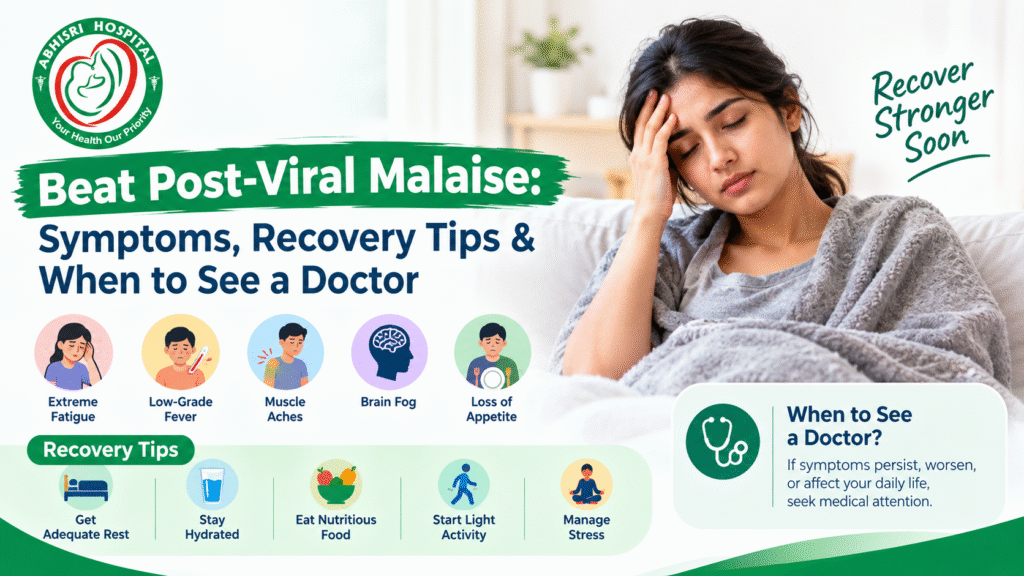
By Dr. Rishabh Gautam
Recovering from a viral infection such as influenza, COVID-19, or a severe cold does not always mean that you will immediately return to your normal energy levels. Some people continue to experience fatigue, muscle aches, poor concentration, and unrefreshing sleep even after the initial infection has resolved. This may be described as post-viral malaise or post-viral fatigue. At Abhisri Hospital, a multispecialty hospital in Unnao, patients with persistent symptoms can seek medical evaluation to understand possible causes and appropriate next steps.
Understanding these symptoms, managing activity carefully, maintaining healthy daily habits, and knowing when to seek medical attention can support a safer recovery.
What Is Post-Viral Malaise?
Post-viral malaise refers to a period of ongoing tiredness, weakness, or other symptoms following a viral infection. The exact cause can vary from person to person. Recovery may be influenced by the severity of the original infection, sleep quality, nutrition, stress, and other underlying health conditions.
It is important to remember that persistent symptoms do not necessarily mean that the virus is still active. However, ongoing or worsening symptoms should not simply be ignored, particularly when they interfere with daily activities.
Common Symptoms of Post-Viral Fatigue
Post-viral symptoms can vary considerably. Common complaints may include:
- Persistent fatigue: Feeling unusually tired or lacking energy even after adequate rest.
- Post-exertional worsening: Symptoms may become more noticeable after physical or mental activity.
- Brain fog: Difficulty concentrating, remembering information, or thinking clearly.
- Muscle and joint aches: Continued body aches or soreness after the acute infection has improved.
- Unrefreshing sleep: Sleeping for an adequate amount of time but still waking up feeling tired.
- Headaches: Recurring or persistent headaches may occur during recovery.
- Reduced stamina: Everyday activities may feel more tiring than they did before the illness.
The severity and duration of these symptoms can differ significantly between individuals.
4 Practical Steps to Support Recovery
1. Practice Pacing
Avoid suddenly returning to your previous level of physical or mental activity. Instead, divide demanding tasks into smaller portions and take breaks before you become exhausted.
A gradual approach can help you identify your current energy limits. If activity consistently causes a significant worsening of symptoms afterward, reduce the intensity and discuss persistent problems with a healthcare professional.
2. Prioritize Rest and Sleep
Good-quality sleep is an important part of recovery. Most adults generally need around 7–9 hours of sleep per night, although individual needs can vary.
Maintain a consistent sleep and wake schedule, keep your sleeping environment comfortable and dark, and reduce stimulating screen use before bedtime if it interferes with your sleep.
If you continue to experience unrefreshing sleep despite maintaining healthy sleep habits, discuss it with a doctor.
3. Stay Hydrated and Eat a Balanced Diet
Adequate hydration and balanced nutrition can help support normal recovery and overall health.
Choose a variety of nutrient-rich foods, including:
- Fruits and vegetables
- Whole grains
- Lean sources of protein
- Nuts and seeds
- Healthy sources of fats
There is no specific food proven to cure post-viral fatigue. Rather than focusing on a single “anti-inflammatory” food, aim for a varied and balanced diet that provides sufficient calories, protein, vitamins, and minerals.
4. Return to Movement Gradually
Light physical activity may be appropriate for some people as their symptoms improve. Gentle stretching, short walks, or mobility exercises can be considered when they are tolerated comfortably.
However, people experiencing significant post-exertional worsening should avoid forcing exercise or rapidly increasing activity. Recovery should be individualized, and persistent exercise intolerance should be discussed with a healthcare professional.
How Long Does Post-Viral Fatigue Last?
There is no fixed recovery period for everyone. Many people gradually improve over days or weeks, while others may experience symptoms for longer.
The duration can depend on the original infection, overall health, sleep, stress, and other medical factors. If fatigue or other symptoms continue, become more severe, or interfere substantially with work and daily activities, medical evaluation can help identify whether another condition may be contributing.
Persistent fatigue should not automatically be attributed to a previous viral infection. Conditions such as anemia, thyroid problems, sleep disorders, medication effects, or other health issues can sometimes cause similar symptoms.
When Should You See a Doctor?
Consider speaking with a healthcare professional if symptoms persist, are worsening, or significantly affect your normal routine.
Medical evaluation is particularly important when you have:
- Persistent or severe fatigue
- Ongoing fever
- Unexplained weight loss
- Recurrent or severe headaches
- Persistent dizziness
- Significant weakness
- Difficulty returning to normal daily activities
- Symptoms that continue without improvement
A doctor can review your symptoms, medical history, medications, and recent illness and determine whether further examination or testing is appropriate.
Seek Urgent Medical Attention for Warning Signs
Some symptoms should not be assumed to be part of normal post-viral recovery. Seek urgent medical care if you develop:
- Chest pain or pressure
- Significant difficulty breathing
- Fainting or loss of consciousness
- New confusion or severe difficulty staying awake
- Severe or sudden headache, particularly with neurological symptoms
- New weakness, difficulty speaking, or other signs of a neurological emergency
- A very rapid or irregular heartbeat accompanied by chest pain, fainting, or severe breathlessness
These symptoms can have causes that require prompt medical assessment.
Can Post-Viral Malaise Be Prevented?
There is no guaranteed way to prevent post-viral symptoms after every infection. However, taking adequate rest during an acute illness, staying hydrated, maintaining balanced nutrition, following appropriate treatment advice, and avoiding an unnecessarily rapid return to strenuous activity may support recovery.
If symptoms persist, getting evaluated rather than repeatedly pushing through severe fatigue can also help identify problems that may require treatment.
Conclusion
Post-viral malaise can make the period after an infection frustrating, especially when you expect to feel normal but continue experiencing fatigue, brain fog, aches, or reduced stamina. Recovery is often gradual, and pacing your activities, maintaining good sleep habits, eating a balanced diet, staying hydrated, and returning to movement carefully can support overall recovery.
If symptoms are persistent, worsening, or affecting your daily life, consult a healthcare professional rather than assuming they are simply part of recovery. Abhisri Hospital can provide medical evaluation and guidance when ongoing symptoms require further assessment.
Medical Disclaimer: This article is intended for general informational purposes only and does not replace professional medical advice, diagnosis, or treatment. Symptoms following a viral infection can have multiple causes. Always consult a qualified healthcare professional for advice based on your individual health condition.